
 русский
 简体中文
简体中文

Underground pipeline systems are designed to operate quietly and continuously beneath cities, industrial zones, and remote areas. These systems transport water, gas, oil, and other media over long distances without direct visibility. Because access after installation is limited, every component used in an underground pipeline must be selected with long term operation in mind. One such component is the underground welded ball valve.
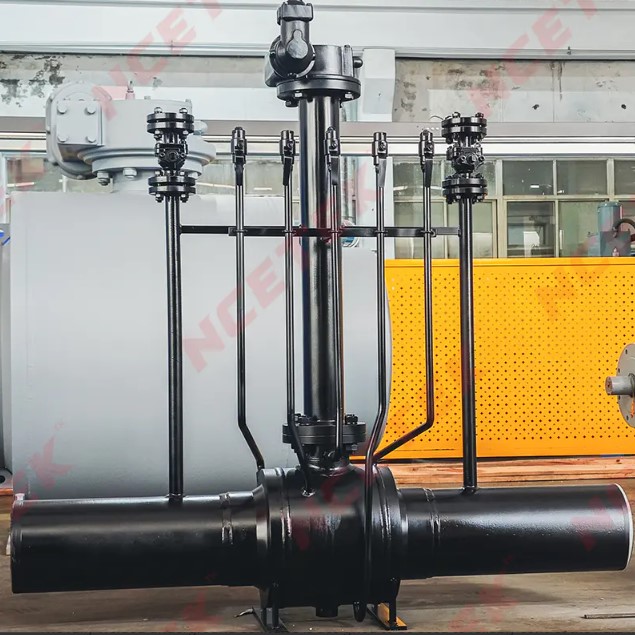
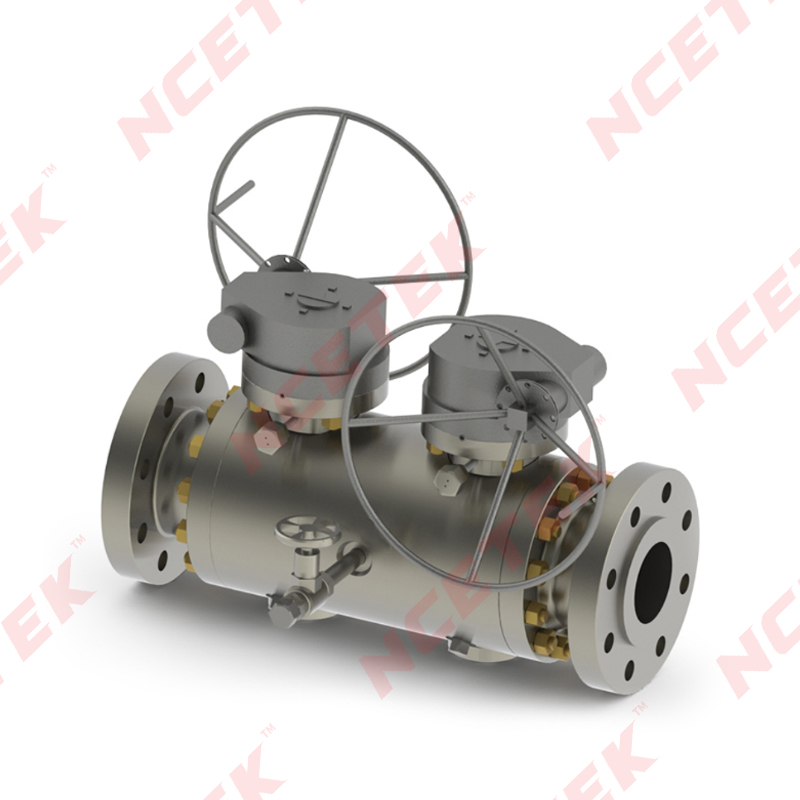
An underground welded ball valve is a type of flow control device intended for installation below ground level. It is connected to the pipeline through welding rather than detachable joints. Once installed, the valve becomes a fixed part of the pipeline structure. This approach reflects the practical needs of buried systems, where stability and consistency are often valued over frequent adjustment.
To understand this valve type, it helps to begin with the general idea of a ball valve. Inside the valve body is a spherical element with a through opening. When the opening aligns with the pipeline, fluid can pass through. When the sphere rotates, the opening moves out of alignment, and flow is stopped. This simple mechanism allows clear open and closed positions, which makes ball valves widely used in many pipeline systems.
What distinguishes an underground welded ball valve from other designs is not the internal movement, but the way the valve is integrated into the pipeline. Welding removes flanges, bolts, and gaskets that would otherwise form separate connection points. In an underground environment, fewer external joints can simplify long term management and reduce the need for intervention.
Why Underground Pipelines Use Welded Valve
Buried pipelines face conditions that are different from above ground installations. Soil pressure, moisture, and environmental changes act on the system continuously. Over time, these factors can influence how components behave. For this reason, underground systems are often designed as unified structures rather than assemblies of easily detachable parts.
The welded valve concept supports this approach in several ways.
These points help explain why welded ball valves are commonly specified for underground use, even though they may not be suitable for every application.
Key Characteristics of an Underground Welded Ball Valve
While designs can vary, underground welded ball valves tend to share several general characteristics. These traits are shaped by their intended environment rather than by appearance or branding.
Some common characteristics include:
These features are not meant to suggest that one valve fits all situations. Instead, they reflect design priorities that are typical for underground systems.
How This Valve Fits Into a Pipeline System
In many projects, an underground welded ball valve is planned as part of the overall pipeline layout rather than added later. Engineers often consider valve placement during early design stages, taking into account isolation needs, maintenance planning, and safety requirements.
For example, a valve may be positioned to isolate a specific section of pipeline in case work is needed downstream. Once buried, the valve is expected to remain functional without routine visual inspection. This expectation influences how the valve is manufactured, installed, and operated.
Although the valve body is underground, operation does not always require excavation. In many systems, extension components allow control from above ground. This setup supports practical operation while keeping the main valve structure protected below the surface.
Comparison With Other Valve Connection Types
| Feature | Underground Welded Ball Valve | Flanged or Bolted Valve |
|---|---|---|
| Typical installation | Below ground | Above ground or accessible areas |
| Connection style | Welded to pipeline | Bolted joints with gaskets |
| Access after installation | Limited | Readily available |
| Maintenance approach | Planned and infrequent | Regular inspection possible |
| Design priority | Structural continuity | Ease of removal |
What This Valve Is Commonly Used For
Although applications vary by industry, underground welded ball valves are often associated with systems where long term service is expected. These may include municipal infrastructure, energy transport networks, and industrial pipelines that operate continuously.
In these settings, valves are not adjusted on a daily basis. Instead, they serve as control points that remain in a stable position until a change is required. The welded structure supports this role by prioritizing consistency over flexibility.
It is important to note that this type of valve is not intended to replace all other valve designs. In areas where frequent access is required or where system layouts change often, alternative connection methods may be more suitable. The underground welded ball valve is best understood as a solution tailored to specific environmental and operational needs.
Common Misunderstandings About Underground Welded Ball Valve
There are a few assumptions that sometimes arise when discussing welded valves for underground use. Clarifying these points helps avoid confusion during system planning.
Understanding these distinctions allows for more realistic expectations when selecting components for buried pipelines.
An underground welded ball valve is a flow control component designed to operate as a permanent part of a buried pipeline. Its welded connection method, internal ball mechanism, and structural simplicity support use in environments where access is limited and continuity is important. Rather than emphasizing frequent operation or easy replacement, this valve type reflects the practical demands of underground infrastructure.
At a basic level, an underground welded ball valve controls flow by rotating a spherical closure element inside the valve body. This sphere contains a passage that either allows fluid to pass through or blocks movement entirely. The valve moves between open and closed states through controlled rotation, typically a quarter turn motion. This clear change in position supports predictable operation, which is particularly important when the valve is not directly visible.
What sets underground operation apart is the context in which this movement takes place. Once buried, the valve is surrounded by soil, backfill material, and sometimes protective layers. The external environment does not allow for frequent manual interaction. As a result, the functional design emphasizes stability, alignment, and reliable response when operation is required.
Internal Flow Control Mechanism
The internal flow control process begins with the ball element positioned inside the valve housing. When aligned with the pipeline, the internal passage creates a straight flow path. This design minimizes unnecessary changes in direction, helping fluid move smoothly through the system.
When isolation is required, the ball rotates so that the solid portion faces the flow path. This creates a barrier that stops movement. The contact between the ball and sealing surfaces supports closure by forming a tight interface. In underground applications, this closure must remain consistent over long periods, even if the valve stays in the same position for extended time frames.
Unlike adjustable valves that regulate flow in small increments, underground welded ball valves are generally used for full open or full closed service. This functional role aligns with how underground pipelines are managed, where isolation points are planned rather than adjusted frequently.
How Welding Influences Valve Function
Welding affects more than how the valve is installed. It also influences how the valve behaves once it becomes part of the pipeline. Because the valve body is welded directly to pipe sections, it experiences the same structural conditions as the surrounding line.
This shared structure means that expansion, contraction, and external loads are distributed more evenly. The valve does not act as a separate component with its own movement relative to the pipeline. Instead, it responds as part of a continuous system.
From a functional perspective, this integration reduces misalignment risks that could interfere with internal movement. When the valve operates, the ball rotates within a housing that remains aligned with the pipeline axis. This alignment supports consistent sealing contact and predictable motion.
Operating the Valve Below Ground
Since underground welded ball valves are not easily accessible, operation methods are adapted to allow control without excavation. While the valve body remains below the surface, operation is often performed through extended components that reach ground level.
Common operation approaches include:
These methods allow the internal ball to rotate as intended while keeping the main valve structure protected underground. The functional goal is to separate control access from the physical valve location.
Functional Stages During Valve Operation
Although the movement itself is simple, the functional process of opening or closing an underground welded ball valve can be viewed in stages.
Each stage depends on internal alignment and consistent contact between moving and stationary surfaces. Since inspection after burial is limited, this reliability must be built into the valve design and installation process.
Flow Behavior in Underground Conditions
Fluid behavior within underground pipelines can vary depending on system usage. Changes in flow direction, start stop cycles, and long idle periods all influence how components perform. The internal flow path of a welded ball valve is designed to accommodate these variations without requiring adjustment.
Because the valve is often stationary for long periods, its internal surfaces must maintain their position without sticking or drifting. When operation is eventually required, the internal mechanism should respond smoothly rather than resist movement. This expectation shapes how underground valves are selected and maintained.
Comparison of Functional Roles in Pipeline Systems
| Operational Aspect | Underground Welded Ball Valve | Accessible Valve |
|---|---|---|
| Frequency of operation | Occasional | Regular |
| Visual confirmation | Not available | Available |
| Control method | Surface or remote | Direct |
| Adjustment role | Isolation | Regulation or isolation |
| Response expectation | Stable after idle periods | Immediate feedback |
Interaction With the Surrounding System
An underground welded ball valve does not function in isolation. It interacts with upstream and downstream pipeline sections, control systems, and sometimes monitoring equipment. When the valve changes position, pressure conditions on both sides of the closure also change.
These interactions are considered during system design. For example, closing a valve in a buried line may isolate a section for maintenance. The valve must hold its position without requiring constant oversight. This holding function is just as important as the initial movement.
In some systems, valves remain closed for extended periods before being reopened. The ability to return to operation after inactivity is a key functional expectation. The welded structure supports this by maintaining internal alignment and reducing exposure to external disturbance.
Functional Simplicity as a Design Principle
One reason underground welded ball valves are widely used is their functional simplicity. The internal movement does not rely on complex sequences or multiple stages. Fewer moving parts inside the valve can make behavior easier to predict over time.
This simplicity supports planning. Engineers can focus on placement, access, and system layout rather than frequent operational adjustments. From a functional standpoint, the valve acts as a clear on off point rather than a variable control element.
Functional Limitations to Consider
Understanding how a valve functions also includes recognizing what it is not intended to do. Underground welded ball valves are not typically chosen for fine flow control. They are also not designed for frequent cycling in environments where constant adjustment is required.
These limitations are not disadvantages when viewed within the correct application. Instead, they help define where the valve fits within a larger system. Matching function to use case is part of responsible pipeline design.
In operation, an underground welded ball valve controls flow through a simple rotational mechanism housed within a welded body that becomes part of the pipeline. Its function depends on internal alignment, stable sealing contact, and reliable response after long periods of inactivity. Operation is performed from accessible points while the valve itself remains protected below ground.
Underground welded ball valves are used in a range of pipeline systems where stability and long term performance matter. Their design makes them suitable for locations that are hard to access and where maintenance needs are limited. Below are typical scenarios where these valves are applied.
Municipal Water Networks
Cities rely on buried pipelines to transport water. Valves are installed to isolate sections during repairs or upgrades. In these systems:
Gas Distribution Pipelines
Gas lines are usually placed underground for safety and efficiency. Valves in these networks provide control points:
Energy and Oil Pipelines
Transporting oil or similar fluids often involves long buried pipelines. Valves serve to divide pipelines into sections:
Industrial Plant Pipelines
Factories or industrial facilities sometimes bury pipelines to save space and improve safety. In these cases:
Summary of Key Applications
| Industry | Purpose | Use Frequency | Access Requirement | Notes |
|---|---|---|---|---|
| Municipal water | Section isolation | Rare | Limited | Minimizes disruption |
| Gas networks | Safety and control | Infrequent | Limited | Ensures continuity |
| Oil/Energy pipelines | Pipeline segmentation | Planned | Restricted | Stable under stress |
| Industrial plants | Process isolation | As needed | Controlled | Reduces surface impact |
Common Observations
Across these use cases, some patterns emerge:
Understanding these use cases helps engineers and planners decide when underground welded ball valves are appropriate. They are a practical solution for pipelines that require controlled isolation without constant maintenance.
Choosing the right underground welded ball valve is essential for reliable and stable pipeline operation. By understanding how these valves function and where they are commonly used, engineers and planners can make informed decisions that align with system requirements. For projects that require customization or specific design considerations, NaiShi Underground Welded Ball Valve OEM/ODM offers flexible solutions that integrate smoothly into various pipeline systems. Our focus is on providing valves that meet practical needs, support long term operation, and fit within existing infrastructure without unnecessary complications.
 nce@cnnsv.com
 +86-15727968392 / +86-15397375798
 +86-577-67091815
 +86-577-67091815
 Dongou Industrial Zone, Oubei Street, Yongjia County, Wenzhou City, Zhejiang Province, China


Contact Us