
 русский
 简体中文
简体中文

Dealing with extremely cold liquids is never easy. In an industrial environment with temperatures well below freezing, even a tiny mistake can cause serious safety problems. Low temperature ball valves are specially designed for operation in such conditions, managing LNG (LNG), liquid nitrogen, oxygen and other low temperature fluids. Their design accounts not only for mechanical function but also for material behavior, temperature change, and operating safety.
Understanding Cryogenic Challenges
Cryogenic environments usually involve temperatures below -150 °C (-238 °F). Metals can become brittle at these extremes, polymers become rigid, and fluids do not behave in the same way as at room temperature. Valves that operate perfectly in ambient conditions can be stuck, leaking, or broken down when they are in a cryogenic environment.
Key challenges include:
In practice, ignoring even one factor may result in operating downtime or security problems. Many plants implement a test cycle to simulate low temperatures prior to final installation.
Material Selection in Practice
The choice of materials determines whether the valve will survive for many years or will fail in a few months. Experience has shown that the structural components are usually made of stainless steel and alloy steel, whereas in the case of seals and seats, cryogen grade polymers are used.
| Component | Material | Reason |
|---|---|---|
| Valve Body | Austenitic Stainless Steel | Maintains toughness at low temperatures |
| Ball | Forged Stainless Steel | Smooth rotation, resists distortion |
| Stem | Alloy Steel | Handles stress without becoming brittle |
| Seat / Seal | Cryogenic-grade PTFE or polymer | Maintains flexibility and sealing integrity |
In one LNG facility, the use of a non-cryogenic seat resulted in a leak in a matter of weeks. Changing to a cryogen grade PTFE seat eliminates this issue and reduces the frequency of maintenance.
Stem and Packing Design
The stem is not just a rod that connects the actuator to the ball; it is a key part of the low temperature valve. Properly designed to prevent freezing, reduce torque and ensure the integrity of the seal.
Field experience indicates that the main reason for high torque and premature failure is the stem misalignment or bad packing selection.
Ball and Seat Interface
The ball-seat interaction is central to valve reliability. Even small gaps caused by thermal contraction can lead to leakage, frost, or wear.
During operation in the liquid nitrogen system, although the material is contracted, the floating ball valve remains tightly closed to prevent gas loss.
Thermal Management and Insulation
Proper heat management is crucial to prevent frost, condensation, and heat stress.
In practice, insulation jackets not only preserve performance, but also increase the safety of the operator handling the valves.
Installation and Operational Tips
Even the best-designed valve may fail if it is installed or not properly operated. Good practices are essential:
Installation Guidelines:
Operational Advice:
Many operators neglect slow precooling or gradual startup, which is a simple step that dramatically reduces the pressure on the valve.
Safety Considerations
Cryogenic fluids present risks such as frostbite, enrichment of oxygen, and flammability. Valve design and operational protocols help mitigate these hazards:
Operator training is as important as design; even the smallest mistake can lead to danger.
Comparing Cryogenic Valve Types
Different cryogenic valve types suit different applications:
| Valve Type | Advantages | Considerations |
|---|---|---|
| Floating Ball | Self-adjusting under pressure | Higher torque for larger sizes |
| Trunnion-Mounted | Reduces stress and torque | More complex structure |
| Metal-Seated | Durable in aggressive fluids | Requires precise actuation |
| Soft-Seated | Good sealing at low pressure | Limited temperature range |
The choice of the appropriate type is determined by the characteristics of the fluid, the operating pressure, and the variation of the temperature.
Real-World Applications
Cryogenic ball valves are used across industries:
Case Study 1: LNG Facility
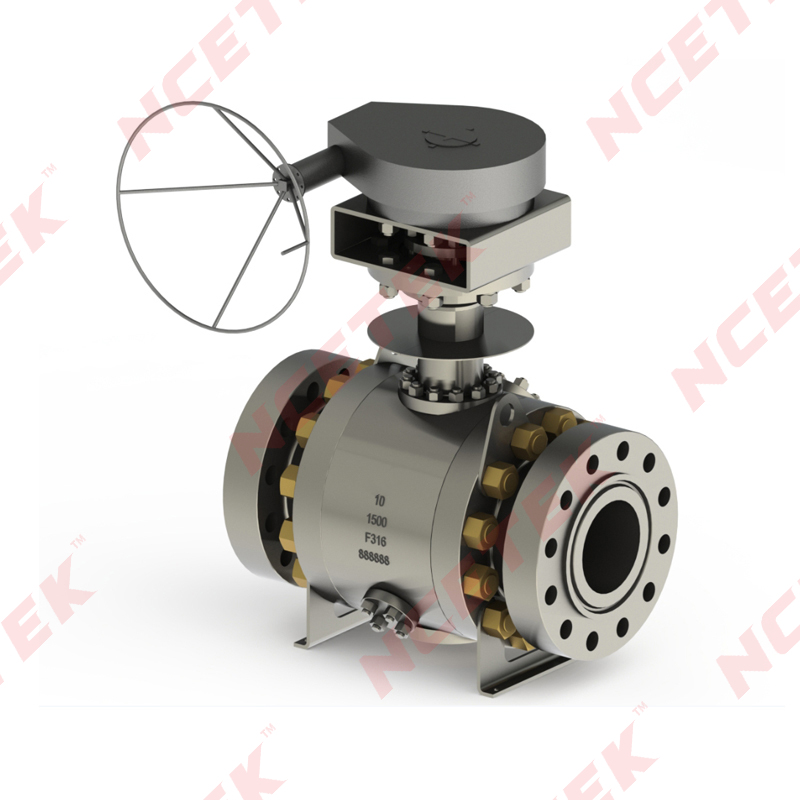
Valves manage thousands of liters of liquefied gas daily. Trunnion-mounted valves with bellows seals reduce torque and maintain tight sealing. Insulation prevents frost on the surrounding buildings.
Case Study 2: Liquid Nitrogen Systems
Floating ball valves maintain tight seals despite valve body contraction. Pre-cooling and insulation jackets prevent sudden thermal stress.
Common Issues and How to Address Them
| Problem | Cause | Solution |
|---|---|---|
| Low-temperature leakage | Seal contraction | Use cryogenic-grade polymer, adjust seat design |
| High operating torque | Stem friction or misalignment | Low-friction packing, consider trunnion design |
| Frost accumulation | Heat ingress | Add insulation, check gaps |
| Valve freezing | Rapid temperature change | Gradual cooling and pre-cooling steps |
Preventive measures reduce downtime and improve safety.
Emerging Innovations
Modern cryogenic valves include features such as:
These innovations increase reliability, prolong service life, and facilitate maintenance.
Low temperature ball valve is a special component designed to deal with some of the most severe operating conditions. The choice of materials, the design of the ball and the seat, the design of the stem and the packing, as well as the heat management are the key factors for the reliability of the valve. Properly installed, operated and maintained further guarantees security and longevity.
From LNG storage to chemical and industrial gas systems, it is important to know these principles to keep a stable process, minimize downtime, and minimize operational risks. Careful design, careful operation, and safety make the low temperature ball valve essential for the low temperature fluid.
 nce@cnnsv.com
 +86-15727968392 / +86-15397375798
 +86-577-67091815
 +86-577-67091815
 Dongou Industrial Zone, Oubei Street, Yongjia County, Wenzhou City, Zhejiang Province, China


Contact Us