
 русский
 简体中文
简体中文

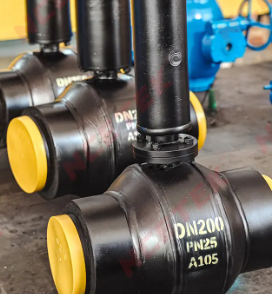
Flow control has always been part of industrial systems, but the way valves are sourced has been changing in small steps. In earlier stages, purchasing often focused on availability. If a valve could be delivered quickly and fit basic requirements, that was usually enough.
Over time, expectations began to shift. Instead of looking only at the product itself, more attention is now given to where and how it is made. Buyers gradually started to look beyond simple supply and pay attention to production conditions, consistency, and how a factory responds over repeated orders.
This is where the idea of a Ball Valve Factory becomes more relevant. It represents not just a place where products are made, but a point where design, material handling, and production flow come together.
In some industrial discussions, manufacturers such as Zhejiang Naishi Valve Co., Ltd. are mentioned as part of this broader context, where supply is closely tied to how production is organized rather than only what is delivered.
A Ball Valve Factory is usually understood as a production environment where valve components are processed, assembled, and prepared for use in different systems. It is not only about output, but also about how that output is maintained over time.
Compared with trading-based supply, a factory setting tends to show more of the production process itself. Materials move through different stages, and each stage contributes to the final structure of the valve.
This does not necessarily make one approach better than another. Instead, it creates a different type of visibility. Buyers who work directly with a factory often see how adjustments are made and how variations are handled.
Some aspects that are often observed in such environments include:
These details may not always be visible from the outside, but they influence how consistent the final product feels over time.
When valves are used in systems that operate over longer periods, the idea of long-term cooperation becomes more important than one-time purchasing.
Buyers often look for signs that a Ball Valve Factory can maintain steady output across different production cycles. This is not always about large changes, but about small details staying consistent.
Communication also plays a role. When the same type of valve is ordered more than once, small adjustments may be needed. A factory that can respond clearly to these changes often becomes easier to work with over time.
From a practical point of view, long-term cooperation is shaped by:
These factors tend to matter more as cooperation continues, rather than at the first stage of contact.
In pipeline environments, material choice often becomes part of the discussion. A Forged Steel Ball Valve Supplier is usually considered when systems require a certain level of structural stability during operation.
Pipelines often run continuously, and conditions inside them may change depending on flow, pressure, or surrounding environment. Because of this, the structure of the valve needs to match the way the system behaves.
Forged steel is one of the materials used in these situations, mainly because of how it is processed and how it responds under working conditions. The supplier, in this case, becomes more than a delivery point. It reflects how the material is handled before the valve is assembled.
This connection between material and application does not stand alone. It is usually considered alongside other factors such as installation requirements and maintenance expectations.
Different industries use valves in slightly different ways. Even when the basic function is the same, the surrounding conditions can change how the valve needs to perform.
A Forged Steel Ball Valve Supplier often works across these variations by adjusting production details rather than changing the entire structure.
For example, in some environments:
The supplier's role is not only to provide the valve, but to align production with these differences.
This does not always require large changes. In many cases, it is about small adjustments in how the valve is prepared and assembled.
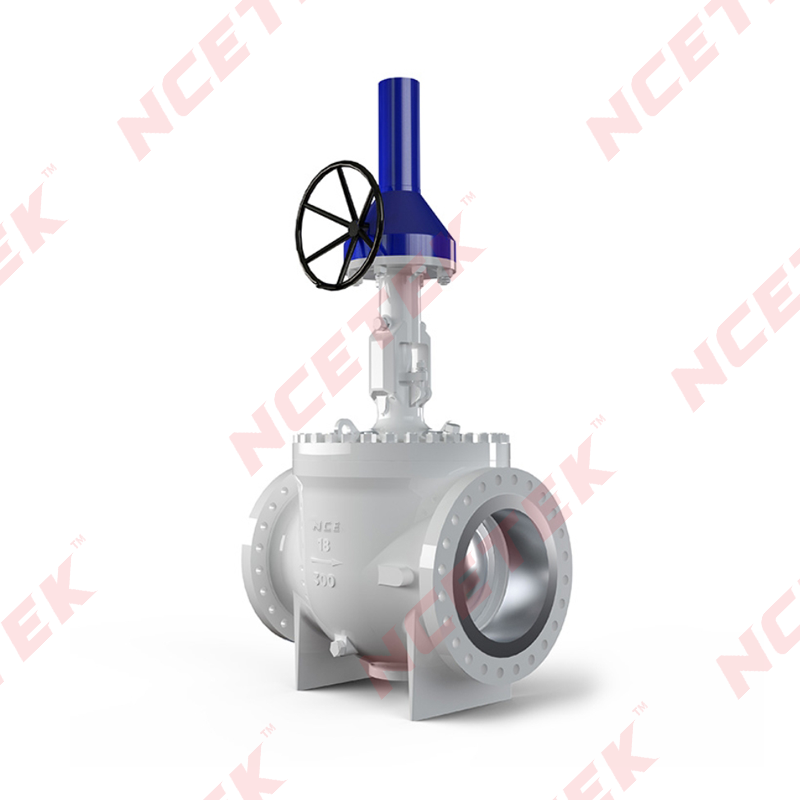
The Rising Stem Ball Valve Manufacturer is often discussed when a different movement pattern is needed in valve operation.
Unlike standard designs where the handle movement is limited to rotation, this type of valve includes a vertical movement component. As the valve operates, part of the structure moves upward or downward.
This movement can make it easier to observe whether the valve is open or closed, especially in situations where visual confirmation matters.
From a production point of view, this design introduces additional considerations. The alignment between moving parts needs to remain stable, and the interaction between rotation and vertical motion must stay smooth.
Because of this, manufacturing such valves involves slightly different attention compared to more common structures.
Not all valves are produced in the same way, even when they serve similar functions. A Ball Valve Factory may handle different types of valves, each requiring its own approach during production.
Some designs are more standardized, allowing repeated production with minimal variation. Others involve more flexible adjustments depending on application needs.
The difference often appears in how production is organized:
| Production Aspect | Standard Valve Approach | Specialized Valve Approach |
|---|---|---|
| Design variation | Limited changes | More flexible adjustments |
| Production flow | Repetitive steps | Adapted per requirement |
| Material handling | Consistent pattern | Adjusted based on use |
| Assembly focus | Speed and uniformity | Alignment and detail |
Neither approach replaces the other. They exist side by side, depending on how the valve will be used.
Choosing a Ball Valve Factory is rarely a single-step decision. In most real situations, it happens slowly, sometimes after several rounds of communication.
At first, the focus is usually simple. People try to see whether basic information is clear and whether questions are answered without confusion. If this stage feels smooth, the conversation naturally continues. If not, it often pauses or becomes more cautious.
Later, attention shifts to how consistent the output looks. A sample might seem fine, but what matters more is what happens when the same request is repeated. Small differences start to matter more in repeated use.
There is also the way changes are handled. In practice, requirements are not always fixed. Sometimes drawings or details get adjusted along the way. A factory that responds without disrupting the whole process usually feels easier to work with.
It is not always written down, but people tend to notice things like:
These small signals often influence trust more than formal descriptions.
When discussions move closer to actual cooperation, small details start to stand out more than general descriptions.
For example, surface finishing is not always discussed at the beginning, but it becomes noticeable once samples are compared. Even small differences in texture or fitting can affect how the product is perceived.
Packaging sometimes gets overlooked, yet it often shows how carefully items are handled after production. A neatly arranged package usually suggests that attention continues beyond the production stage.
Delivery timing is another factor, but not in a strict sense. It is less about being fast or slow, and more about whether timing feels predictable. When schedules shift too often, planning on the receiving side becomes harder.
Even communication style plays a role. Some exchanges are very direct, while others require more clarification. Over time, this shapes how comfortable long-term cooperation feels.
These points may seem small on their own, but together they often influence final decisions more than technical descriptions.
Demand in industrial systems rarely changes in a straight line. It shifts slowly, and sometimes the change is only visible when comparing different periods of use.
One noticeable direction is that users now tend to describe application conditions more carefully. Instead of only asking for a valve type, there is often more explanation about how it will be used.
This affects how production is arranged inside a Ball Valve Factory. The same basic equipment may still be used, but the way steps are organized can vary slightly depending on requirement patterns.
Material handling also becomes more situation-based. Some applications prefer certain structural behavior, while others focus more on movement stability. These differences do not always require major changes, but they influence small production choices.
Communication between sides has also become more frequent in many cases. Instead of only placing an order and waiting, there is often more back-and-forth during selection and adjustment stages.
None of these changes are dramatic, but they gradually reshape how production is understood.
Different valve structures naturally lead to different handling during manufacturing, even if they share similar basic functions.
A Rising Stem Ball Valve Manufacturer, for example, needs to pay attention to movement alignment in a way that is slightly different from standard structures. The focus is not only on sealing, but also on how motion behaves during operation.
On the other hand, when working with a Forged Steel Ball Valve Supplier, material handling becomes more noticeable. The way material is shaped and prepared influences how the final product behaves under working conditions.
Inside a Ball Valve Factory, these differences do not always mean separate systems. Often, they are handled within the same general production environment, just with small adjustments at different stages.
What changes more is attention. Different products require attention in different places, even if the overall flow looks similar from outside.
A Ball Valve Factory is often seen as a single point of production, but in practice it connects several different stages together.
Material enters from one side, passes through shaping and assembly, and leaves as a finished component. Along this path, small decisions are made at each step that influence the final outcome.
Because of this, production is rarely isolated. A small change in design can affect multiple stages, even if it looks minor at first. Similarly, material differences may require slight adjustments in handling.
When different valve types are produced in the same environment, these small variations become part of daily operation rather than exceptions.
It is less about separate processes and more about one connected flow that adapts slightly depending on what is being produced.
Looking at industrial valve supply as a whole, changes tend to appear gradually rather than suddenly.
A Ball Valve Factory sits inside this slow movement, adjusting its workflow based on demand patterns, material behavior, and communication needs.
Whether it involves a Rising Stem Ball Valve Manufacturer structure or work related to a Forged Steel Ball Valve Supplier, the main idea stays similar. Production and application are closely linked, and small adjustments on one side often influence the other.
Over time, this connection becomes the quiet structure behind how valve supply continues to evolve.
 nce@cnnsv.com
 +86-15727968392 / +86-15397375798
 +86-577-67091815
 +86-577-67091815
 Dongou Industrial Zone, Oubei Street, Yongjia County, Wenzhou City, Zhejiang Province, China


Contact Us