
 русский
 简体中文
简体中文

A ball valve is a quarter-turn flow control device that uses a perforated spherical element to regulate the passage of liquids or gases inside a piping system. The name comes directly from that round ball sitting inside the valve body. When you rotate the handle or lever by 90 degrees, the hole drilled through the ball either lines up perfectly with the pipe ends to permit full flow or turns sideways to stop the stream completely.
This basic principle makes operation very direct. One smooth motion opens the path wide or closes it tight. Many people find this simplicity appealing compared with valves that need several full rotations to change position. In practice, the quick action becomes especially useful during startup, shutdown, emergency isolation, or any situation that calls for rapid response.
The valve typically consists of several main parts working together:
In the open state, fluid travels in a nearly straight line through the valve with minimal change in direction. Full-port designs keep the bore diameter close to the pipe’s inner diameter, reducing flow resistance. Reduced-port versions use a smaller opening, which can lower material costs and overall weight while still providing acceptable performance in many non-critical lines.
The sealing action often benefits from the pressure of the fluid itself in floating-ball arrangements. Upstream pressure gently pushes the ball toward the downstream seat, improving contact and tightness without needing heavy mechanical force. This natural assistance contributes to consistent shutoff across a wide pressure range.
Because the design avoids complex internal mechanisms like rising stems or intricate disc arrangements, ball valves generally experience less wear during frequent on-off cycles. Technicians appreciate that fewer moving parts usually translate to simpler troubleshooting and shorter downtime when service is required.
In everyday language, you can picture a ball valve as a gate that pivots on its center axis. Align the opening with the pipe and everything flows freely; swing it perpendicular and the solid portion of the ball blocks the way completely. That mental image helps explain why these valves have become so widespread across residential, commercial, and heavy industrial settings.
Manufacturers produce several distinct styles of ball valves so each can match specific operating conditions, pipe sizes, pressure levels, temperature ranges, and media characteristics.
Floating Ball Valve
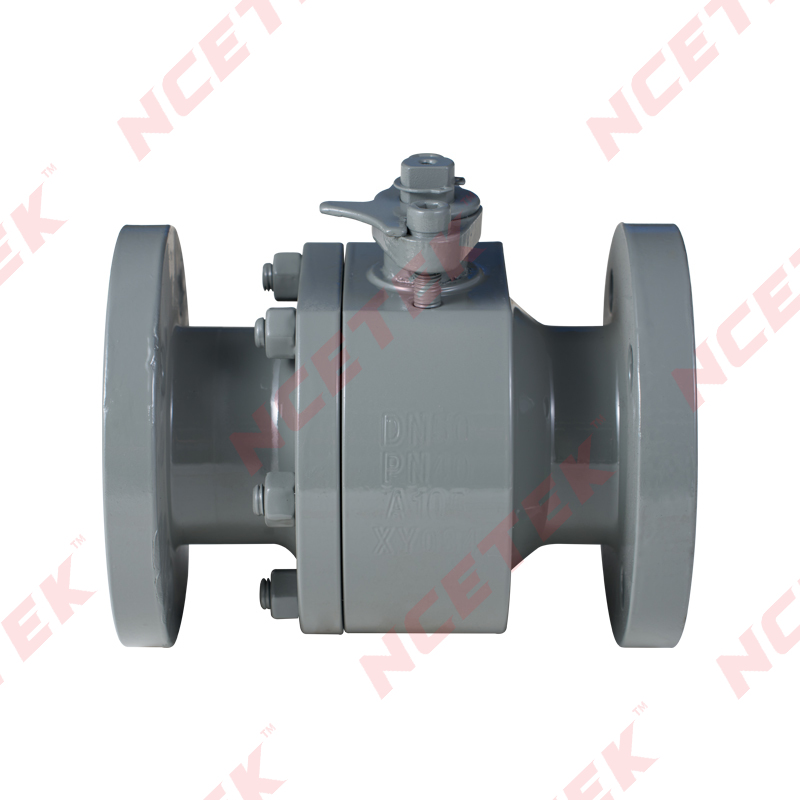
This is the most common category found in general service. The ball is not rigidly fixed to the stem; it has a small amount of free play inside the body cavity. When pressure builds on the upstream side, it gently forces the ball against the downstream seat ring, enhancing the seal.
Floating designs work reliably in moderate pressure applications and are widely installed in water distribution, compressed air lines, fuel transfer systems, and many process pipelines. Their construction tends to be straightforward, keeping initial costs reasonable for standard duties.
Trunnion-Mounted Ball Valve
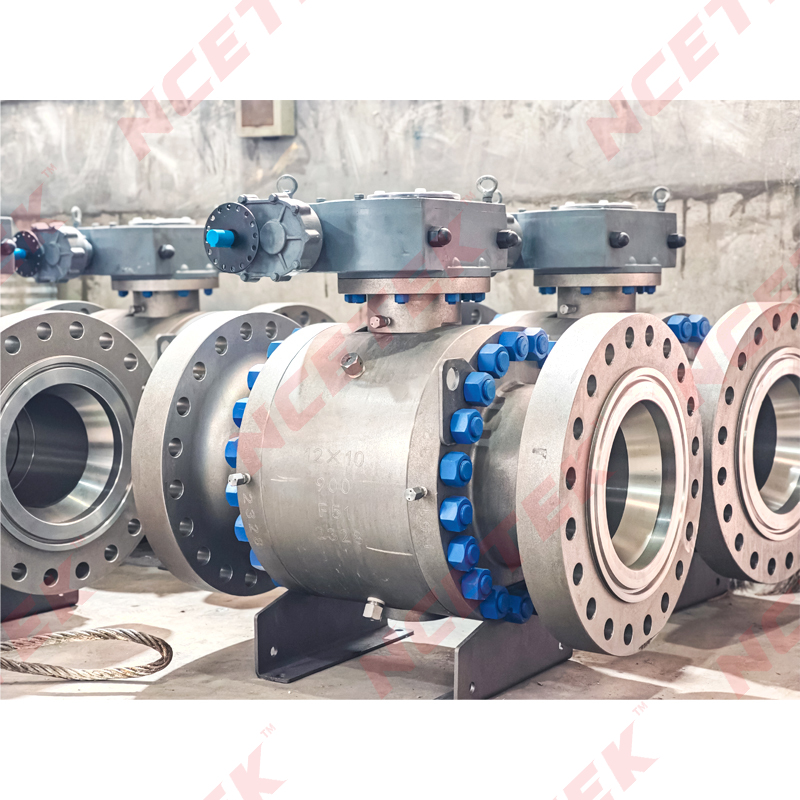
When line pressure climbs higher or diameters grow larger, trunnion-mounted construction becomes the practical choice. Here the ball is supported by short shafts (trunnions) at both the top and bottom. These bearings hold the ball firmly in position so it does not shift under heavy load.
Because the ball remains centered, the seats experience even loading and the torque required to turn the stem drops noticeably. Lower torque means smaller actuators can be used and manual operation stays manageable even on big valves. Trunnion types appear frequently in oil and gas transmission, petrochemical plants, and long-distance pipelines.
Fully welded body versions of trunnion valves eliminate external bolted joints, reducing potential leak paths. That feature makes them especially suitable for underground burial, subsea service, or any location where external access for maintenance is limited.
Cryogenic Ball Valve
Extremely low temperatures demand special attention to material behavior and seal performance. Cryogenic ball valves feature extended bonnets that position the stem packing and operator far enough from the cold fluid to prevent frost formation on moving parts. Special low-temperature elastomers or spring-loaded seats maintain flexibility and contact pressure even when the media approaches -196 °C.
These valves handle liquefied natural gas, liquid oxygen, liquid nitrogen, and similar services in gas separation plants, LNG terminals, and industrial gas facilities.
Metal-Seated Ball Valve
Soft polymer seats can degrade quickly when temperatures rise sharply or when the flowing medium carries abrasive particles. Metal-seated designs replace those soft rings with precision-machined metal surfaces, often enhanced by specialized coatings or hardening treatments.
The result is a valve capable of sealing effectively in steam lines, high-temperature hydrocarbons, slurries, or any stream that would rapidly wear out conventional seats. Metal-to-metal contact also tolerates occasional solids passage better than soft seats in many cases.
Multi-Port Ball Valve
Standard ball valves control flow in a straight two-way path, but multi-port versions add side outlets to create three-way or four-way flow patterns.
Three-way valves usually follow either an L-pattern or T-pattern geometry. L-pattern models direct flow from one inlet to one of two possible outlets. T-pattern models can combine two inlets into a single outlet, split one inlet to two outlets, or allow flow straight through while blocking the side port.
Four-way models provide even more routing flexibility, commonly used in double-acting cylinder control or complex manifold arrangements.
Multi-port configurations reduce the number of separate valves and fittings needed, simplifying piping layouts in mixing stations, bypass loops, diverting systems, and distribution headers.
Ball Valve Types
| Type | Ball Support Style | Typical Pressure Range | Common Media / Service | Key Operational Benefit |
|---|---|---|---|---|
| Floating | Free-floating | Low to medium | Water, air, light oils | Simple construction, cost-effective |
| Trunnion-mounted | Top & bottom trunnions | Medium to high | Crude oil, natural gas, heavy products | Low operating torque, stable under load |
| Cryogenic | Floating or trunnion | Varies | LNG, liquid nitrogen, liquid oxygen | Extended bonnet prevents freeze-up |
| Metal-seated | Floating or trunnion | Medium to high | Steam, slurries, hot hydrocarbons | Handles abrasion and elevated heat |
| Multi-port | Floating or trunnion | Low to medium-high | Mixing, diverting, bypass applications | Reduces piping complexity |
Materials Often Used in Ball Valve Manufacturing
The service conditions dictate which materials make the most sense for the valve body, ball, seats, stem, and seals. The goal is always to achieve a good balance between chemical compatibility, mechanical strength, temperature behavior, pressure containment, and overall cost.
Carbon steel remains a frequent choice for non-corrosive or mildly corrosive media. It offers solid strength at an accessible price point and suits many hydrocarbon streams, municipal water, and general utility lines. Protective coatings or linings sometimes extend its usefulness in slightly aggressive environments.
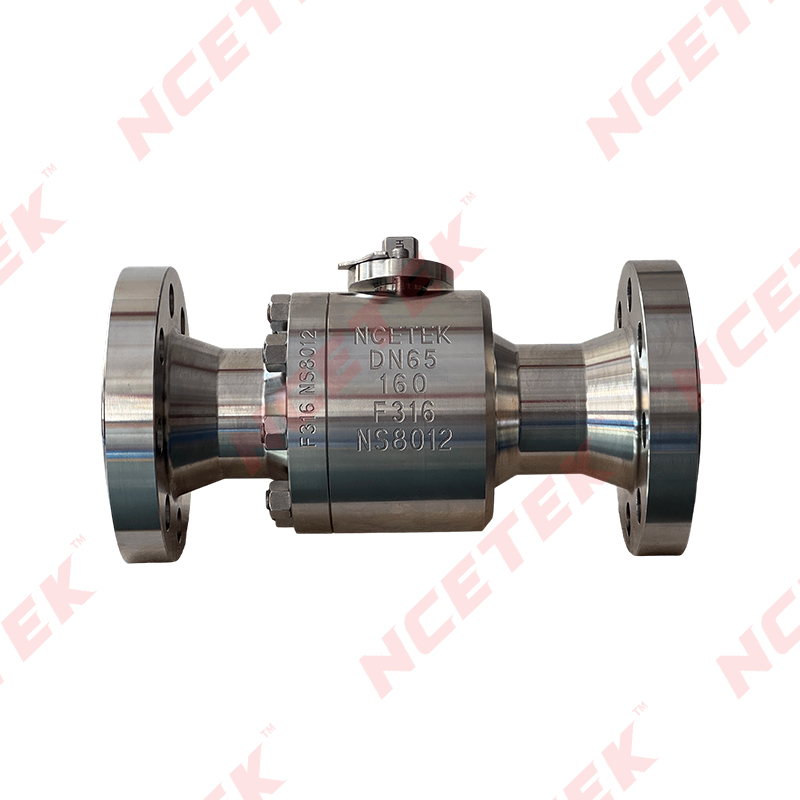
Stainless steel alloys provide noticeably better resistance to rust, pitting, and chemical attack. Grades such as 304 and 316 appear regularly in food and beverage processing, pharmaceutical production, marine applications, and systems handling chlorides or mild acids. The added nickel and molybdenum in 316 versions further improve performance against certain corrosive agents.
Alloy steels blend additional elements—chromium, molybdenum, nickel, vanadium—to enhance specific properties. Some formulations deliver improved toughness at low temperatures, others maintain strength when heat increases, and certain grades resist stress corrosion cracking under combined pressure and chemical exposure.
For the highest temperature or most severe abrasion scenarios, specialized heat-resistant or wear-resistant alloys enter the picture. These materials help the valve hold its shape and sealing integrity when ordinary steels would soften or erode prematurely.
Body construction methods also influence material performance:
Seats and stem seals often use fluoropolymer compounds because they resist a broad spectrum of chemicals and maintain low friction across wide temperature bands. When greater resilience or specific pressure response is needed, various rubber-like elastomers find application.
Hard-faced or coated metal seats become the default when soft materials cannot survive the service. Tungsten carbide, chrome carbide, nickel-based overlays, and similar treatments create durable sealing surfaces that withstand continuous exposure to erosive or high-velocity flows.
A few practical questions guide material selection in most projects:
Matching materials carefully to the application typically results in longer intervals between maintenance and fewer unexpected interruptions.
 nce@cnnsv.com
 +86-15727968392 / +86-15397375798
 +86-577-67091815
 +86-577-67091815
 Dongou Industrial Zone, Oubei Street, Yongjia County, Wenzhou City, Zhejiang Province, China


Contact Us