
 русский
 简体中文
简体中文

Anyone who has spent time in refineries, offshore platforms, mining operations, or power plants understands how unforgiving process conditions can be. Fluids often run at temperatures exceeding 600°C, pressures climb into the thousands of psi, and the media itself may carry sharp solids, strong acids, or high levels of hydrogen sulfide that attack metals relentlessly. In such environments, soft-seated ball valves quickly fail—their polymer seats melt, swell, or dissolve, resulting in leaks and frequent shutdowns. Metal-seated ball valves address this by using direct metal-to-metal contact between the ball and seats, providing fire-safe sealing and reliable shutoff even when conditions become extreme.
The key to success lies in making these valves last. Corrosion works slowly but steadily, degrading critical surfaces until the seal is compromised. Abrasive particles, cavitation, rapid temperature swings, and high-velocity flow cause much faster mechanical damage, wearing down seats and bodies until the valve can no longer shut tightly. Factories that specialize in severe-service metal-seated ball valves tackle both issues head-on, blending the best alloys, protective coatings, thoughtful design, and rigorous testing to create products that commonly remain in service for fifteen to twenty years—far outlasting standard valves that might need replacement every few months.
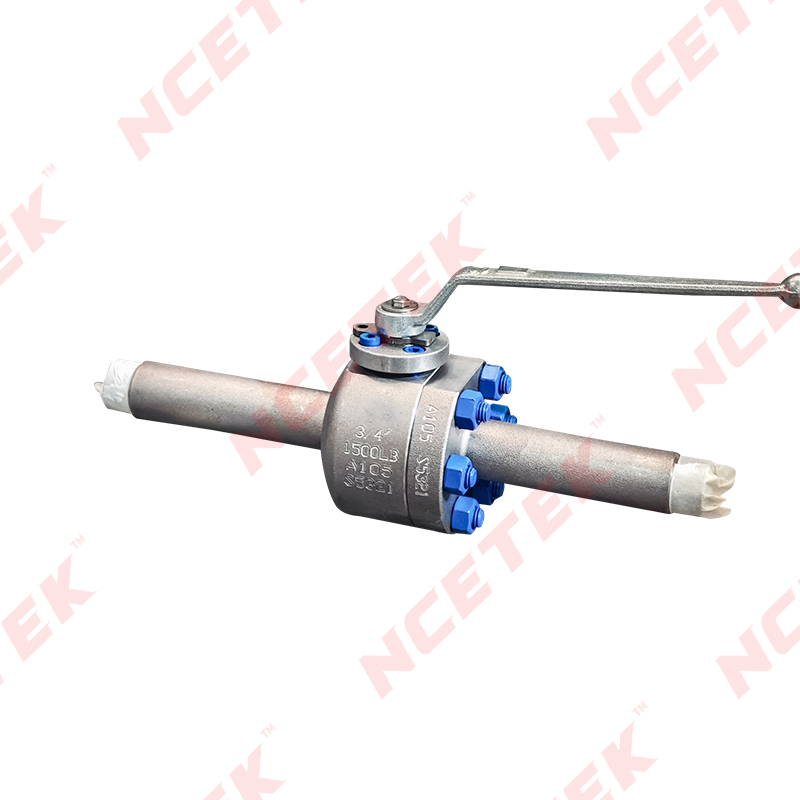
At its core, a metal-seated ball valve features a precisely machined spherical ball that rotates ninety degrees inside a forged or cast body, opening or closing flow through a central bore. In floating designs, upstream line pressure pushes the ball against the downstream seat to form the seal. Trunnion-mounted versions fix the ball on upper and lower pivots while allowing the seats to move inward, typically aided by springs or fluid pressure. The seats start as rings of stainless steel or nickel alloy, then receive thick hard-facing layers—Stellite for oxidizing conditions, tungsten carbide for abrasive slurries, or chromium carbide for reducing acids. After overlay application and heat treatment, the ball and seats are lapped together until they mate almost perfectly, achieving leak rates that meet or exceed the strictest industry requirements without relying on soft seals.
Body materials range from carbon steel for milder applications to duplex stainless steels for seawater exposure and full nickel alloys such as Inconel or Hastelloy when the chemistry is highly aggressive. The finished valve must handle extreme temperatures and pressures while keeping actuation torque reasonable and maintaining performance through thousands of cycles.
Corrosion appears in many forms—uniform thinning, localized pitting, crevice attack, chloride-induced cracking, sulfide stress cracking, or galvanic acceleration—and each requires specific countermeasures starting from the raw-material stage.
Selecting the right base alloy is the foundation. Process conditions—fluid chemistry, temperature range, pressure, and trace impurities—determine whether 316L stainless steel suffices, whether duplex or super-duplex grades are needed for chloride resistance, or whether a nickel-base alloy like Inconel 625 or Hastelloy C-276 is essential. Sour service applications follow strict NACE MR0175/ISO 15156 guidelines to prevent cracking. Every incoming heat of material is analyzed spectroscopically to verify composition and reject batches containing excessive sulfur, phosphorus, or other detrimental elements.
Hard-facing overlays protect seating surfaces while also resisting chemical attack. These layers are applied using automated TIG welding, plasma transferred arc, high-velocity oxy-fuel spraying, or laser cladding, chosen according to the required thickness and minimal dilution of the substrate. Post-weld heat treatment relieves stresses that could otherwise create corrosion pathways. Additional protective coatings, such as electroless nickel plating or thin nitride films deposited by physical vapor deposition, provide further defense on internal passages and stems.
Surface finish is critical. Internal bores and cavities are polished or electropolished to a mirror-like smoothness, eliminating tiny crevices where pitting could begin. Chemical passivation after machining and welding restores the protective oxide layer on stainless components.
Design features eliminate many corrosion risks. Smooth internal contours prevent stagnant zones, vented body cavities avoid trapped liquid accumulation, and drain ports allow complete flushing during maintenance. Stem seals incorporate live-loaded graphite packing or bellows to keep process media away from critical areas, while careful material selection prevents galvanic couples.
Abrasive slurries, high-velocity gases, cavitation, and rapid temperature changes can destroy seating surfaces far faster than chemical corrosion alone. Manufacturers address these challenges with targeted solutions.
For abrasive service, seating materials rely on tungsten carbide grades that achieve hardness above 70 HRC while retaining enough toughness to withstand particle impacts. Ongoing refinements adjust grain size and binder content to match the specific solids involved. In the toughest applications, advanced ceramics or specialized coatings push performance even further.
Flow geometry plays a major role in reducing erosion. Contoured seat pockets, replaceable downstream wear rings, and anti-cavitation trim help distribute energy and direct solids away from sealing surfaces. Trunnion designs with spring-loaded seats maintain consistent contact force even after slight wear, significantly extending service life.
Thermal cycling requires compatible expansion rates between ball, seats, and body, along with controlled heat treatments to minimize distortion. Some seat designs incorporate slight flexibility to accommodate differential growth without losing preload.
Testing confirms everything performs as expected. Beyond standard pressure and seat-leak tests, valves undergo thousands of cycles at operating temperature, extended runs in slurry loops, fire testing to API standards, and fugitive-emission checks. Accelerated corrosion tests in autoclaves or salt-spray chambers compress years of potential exposure into weeks, providing rapid feedback on new material combinations.
Real-world performance tells the true story. A Gulf Coast refinery switched to Hastelloy valves with tungsten-carbide trim for sulfuric-acid service and extended trouble-free operation from under two years to more than six. An Alberta oil-sands facility handling hot bitumen loaded with sharp sand pushed seat life from months to over two years by using carbide-lined flow paths and erosion shields. North Sea platforms operating in cold, CO₂-rich conditions have achieved ten years of leak-free service with super-duplex bodies and Inconel overlays.
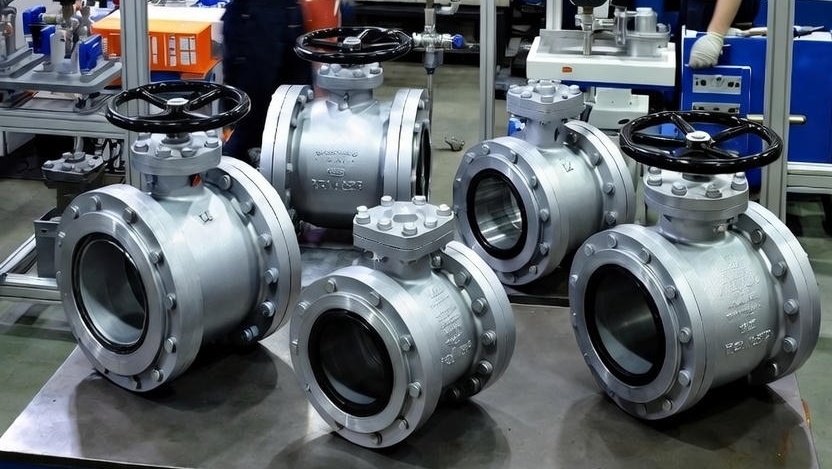
A well-established Metal Seat Ball Valve Factory achieves these results through in-house control of every critical step—from alloy sourcing and hard-facing application to final lapping and testing. By maintaining tight quality oversight throughout production, such factories ensure consistent performance even in the most demanding applications. Another leading Metal Seat Ball Valve Factory has earned recognition for advancing coating technology, particularly through low-dilution laser-clad overlays that dramatically extend valve life in highly abrasive slurries.
Progress continues with additive manufacturing for complex internal geometries, nanostructured coatings that combine extreme hardness with low friction, built-in sensors for real-time seat monitoring, and greater use of recycled high-performance alloys that maintain properties while reducing environmental impact.
Building metal-seated ball valves that thrive in brutal service requires deep metallurgical knowledge, precise surface engineering, careful attention to flow behavior, and relentless testing. Factories that master these elements deliver valves that far exceed specifications, keeping plants running safely and profitably long after lesser products would have failed.
 nce@cnnsv.com
 +86-15727968392 / +86-15397375798
 +86-577-67091815
 +86-577-67091815
 Dongou Industrial Zone, Oubei Street, Yongjia County, Wenzhou City, Zhejiang Province, China


Contact Us