
 русский
 简体中文
简体中文

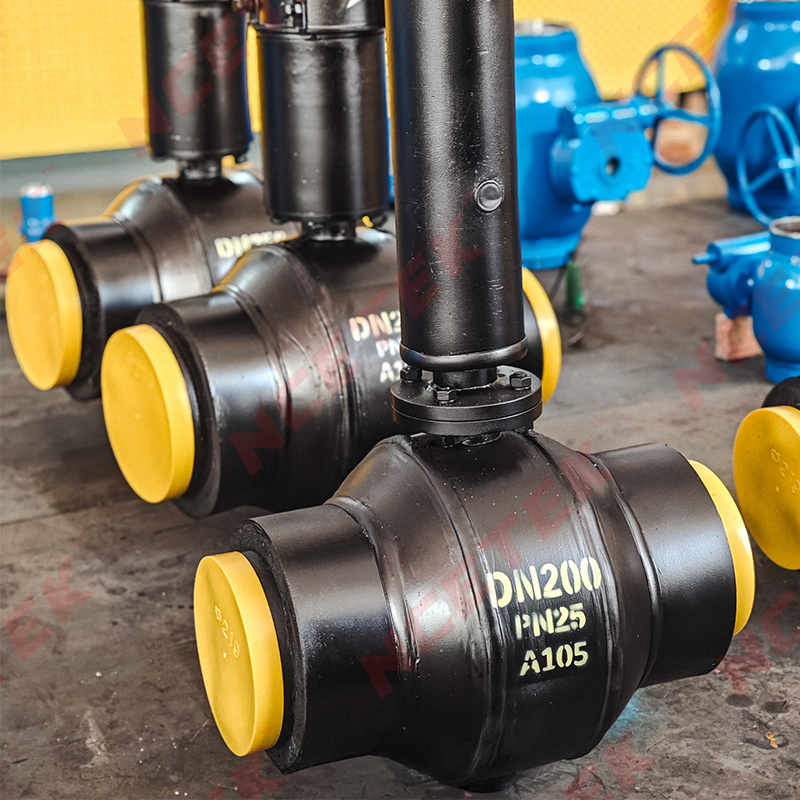
People who deal with ball valves in real industrial settings soon discover that operating torque can turn into a major headache once valves get big or pressures get high. A 24-inch or 36-inch valve sitting in a 1,500 psi gas line can require so much turning effort that floating designs quickly become impractical. Trunnion Mounted Ball Valve Factory designs solve this problem in a clean, mechanical way that keeps torque under control. At the same time, seat selection is just as critical. Soft seats made of polymers handle a lot of everyday applications very well, but there are many tough services where only metal-to-metal seats can deliver the long-term reliability the job demands.
The working principle of a ball valve is straightforward. A spherical ball with a through-bore sits inside a body. Turning the ball ninety degrees aligns the bore with the pipeline for full flow or turns it perpendicular to stop flow completely. Seats on the upstream and downstream sides seal against the ball, and a stem transmits rotation from a handwheel, gearbox, or actuator.
The most important difference between ball valve types is the way the ball is supported. In floating-ball valves, the ball has some axial play. When the valve closes, upstream pressure pushes the ball downstream against the seat to create the seal. This simple arrangement keeps manufacturing costs low and works perfectly well in smaller sizes and moderate pressures.
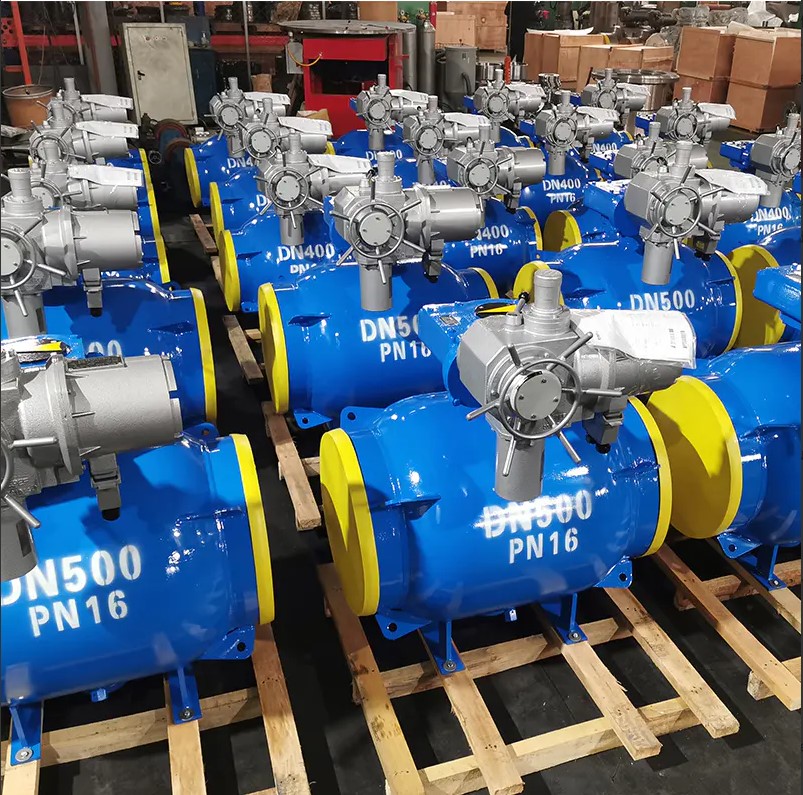
Trunnion-mounted valves take a different path. Short shafts, called trunnions, extend from the top and bottom of the ball and fit into bearings in the valve body. The ball rotates freely but stays fixed in the axial direction. This small design change completely changes how pressure forces are managed inside the valve.
In a floating-ball valve under pressure, the full differential pressure acts across the bore area, creating a large axial force that presses the ball hard against the downstream seat. That high contact pressure generates serious friction, and the friction has to be overcome every time the valve cycles. Because the axial force increases in direct proportion to pressure and to the square of the diameter, torque climbs very quickly as size and pressure go up.
It is common for a 12-inch floating valve in Class 900 service to need torque that only a big hydraulic actuator can provide, and even then the stem, bearings, and gearbox take heavy punishment over time.
Trunnion mounting changes the game by carrying the axial pressure load through the trunnions and bearings instead of through the ball-to-seat interface. The ball stays put axially. The seats—typically spring-loaded or pressure-assisted—then move toward the ball to make contact and establish the seal. Sealing force now comes mainly from the springs plus pressure acting on the relatively small annular area of the seat rings, rather than across the entire bore.
With friction greatly reduced, operating torque usually drops by 60 to 80 percent compared with a floating valve of the same size and class. Low-friction bearings on the trunnions and thrust washers on the stem make rotation even smoother. The fixed position of the ball also prevents the cocking or binding that can add extra drag in floating designs under heavy differential pressure.
The benefits are easy to see in practice. Operators of large-diameter natural gas transmission lines can use standard pneumatic or electric actuators instead of massive hydraulic ones. Offshore platforms save weight and deck space. Refineries and chemical plants get longer life from actuators, gearboxes, and stems because the loads are much lower. Although trunnion valves cost more to build because of the extra machining and components, the savings in actuation hardware and reduced maintenance usually make them the economical choice in severe service.
Seats are the elements that actually prevent leakage when the valve is closed, so the material they are made from has a direct effect on sealing performance, cycle life, and suitability for different services.
Most ball valves use soft seats manufactured from polymers: PTFE, glass-filled PTFE, PEEK, nylon, or similar materials. These polymers conform well to the ball surface, forgiving small scratches or irregularities and providing excellent bubble-tight shutoff in clean fluids at moderate temperatures. They also keep friction low and are relatively inexpensive.
Metal-to-metal seats work differently. They use hardened metal surfaces—usually stainless steel with wear-resistant overlays such as stellite, tungsten carbide, or chrome carbide—that have been lapped to a very precise finish. Sealing relies on direct metal-to-metal contact rather than deformation of the seat material. These seats give up some of the easy conformance and low friction of polymers but gain outstanding resistance to conditions that quickly ruin soft seats.
Soft seats cover a very large percentage of applications, but certain operating conditions push polymers beyond their safe limits, leaving metal-to-metal seats as the practical solution.
High and low temperatures come first. Most soft seats start to soften and extrude above 250 to 300 °C, with standard PTFE topping out around 260 °C continuous. At the cryogenic end, many polymers become brittle below –50 to –100 °C. Metal seats work reliably from –196 °C in LNG service all the way up to 650 °C or higher in the right alloys.
Abrasive fluids destroy soft seats in short order. Sand, catalyst dust, coke fines, mineral slurries, and similar solids embed in the polymer and score the sealing surface, leading to leaks after relatively few cycles. Hard-faced metal seats stand up to erosion much longer.
Very high pressures—generally above 5,000 to 10,000 psi depending on size and temperature—can extrude soft materials into body clearances or cause permanent deformation. Metal seats hold their geometry and sealing integrity in deepwater subsea trees and high-pressure gas injection applications.
Certain aggressive chemicals attack organic seat materials. Wet chlorine, fuming acids, strong oxidizers, and some solvents at elevated temperature require seats made from corrosion-resistant alloys such as Hastelloy, Inconel, or titanium.
Fire safety is another key consideration. In refineries, offshore platforms, and storage terminals, valves must maintain shutoff during and after a fire. Soft seats melt or burn away, but metal-to-metal designs comply with fire-test specifications such as API 607.
High-cycle services and applications where maintenance is difficult or expensive also favor metal seats. Soft materials suffer creep and compression set after thousands of operations, while hard seats maintain performance far longer.
Metal seats do come with trade-offs: higher cost, more precise manufacturing, and less tolerance for large debris. Many manufacturers supply hybrid seats—metal rings with thin soft inserts—for services that fall between the two extremes.
In the most demanding applications—large bore, high pressure, abrasive or corrosive media, extreme temperatures—trunnion mounting and metal-to-metal seats are frequently used together. The fixed ball position keeps the hard seats in perfect alignment, while the inherently low contact force of the trunnion design reduces the chance of galling and keeps torque reasonable even with metal seating surfaces. This combination has become the industry standard for critical pipeline isolation, subsea manifolds, and severe refinery applications.
Trunnion mounting reduces torque by carrying axial pressure loads on dedicated bearings instead of pushing them through the sealing interface, making large high-pressure valves practical to operate with normal-sized actuators. Metal-to-metal seats become necessary whenever temperature extremes, abrasion, very high pressure, aggressive chemicals, fire exposure, or the need for long maintenance-free life push polymeric seats beyond their capabilities.
When ball support and seat material are properly matched to the actual service conditions, the result is a valve that operates smoothly, seals reliably, and continues to perform with minimal attention over many years—exactly what operators need for safe, efficient, and cost-effective production.
 nce@cnnsv.com
 +86-15727968392 / +86-15397375798
 +86-577-67091815
 +86-577-67091815
 Dongou Industrial Zone, Oubei Street, Yongjia County, Wenzhou City, Zhejiang Province, China


Contact Us