
 русский
 简体中文
简体中文

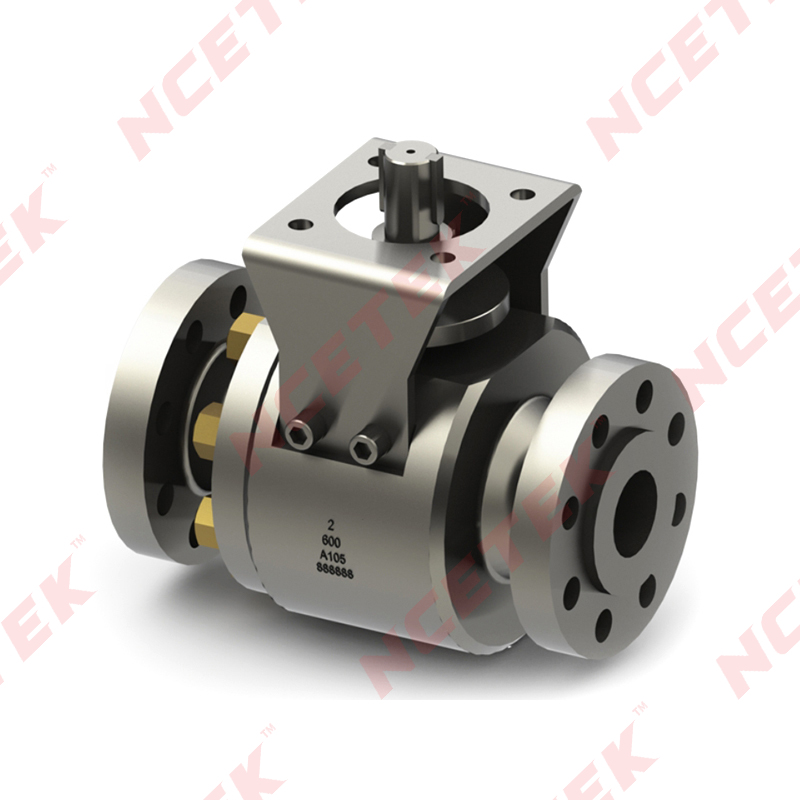
Trunnion Mounted Ball Valve is a type of industrial valve designed to deal with high pressure or high flow. In contrast to the floating ball valves, which allow the ball to float and move under pressure, a trunnion-mounted valve keeps the ball firmly on top and bottom. This support reduces movement, keeps the sealing more stable, and allows the Valve to operate smoothly even in challenging conditions.
How It Works
At the core of the valve is a spherical ball with a hole through it. When the hole aligns with the pipeline, fluid flows freely. Rotating the ball 90 degrees blocks the flow completely. In a trunnion mounted design, the ball is fixed by top and bottom supports called trunnions. The seats, which seal the gap between the ball and the body, can move slightly to maintain pressure against the ball. This makes the seal reliable under changing conditions.
Main parts and their functions:
| Component | Function |
|---|---|
| Ball | Controls flow by turning |
| Trunnion | Holds ball in place under pressure |
| Seat | Creates a tight seal against the ball |
| Stem | Connects actuator or handle to the ball |
| Body | Houses all internal components and resists pipeline pressure |
Why Trunnion Design Matters
The main benefit of the trunnion support is how it changes the internal stress of the valve:
Comparison with Floating Ball Valves
| Feature | Trunnion Mounted | Floating Ball |
|---|---|---|
| Ball Support | Top and bottom trunnions | Held only by seats |
| Pressure Capability | Handles higher pressures | Limited |
| Seat Wear | Even and predictable | Uneven under pressure |
| Torque Required | Lower | Increases with pressure |
| Bidirectional Flow | Often yes | Rarely |
Where These Valves Are Used
Trunnion mounted ball valves are common in industries that require reliability and safety:
Tips for Operation
Even though trunnion valves are robust, correct handling helps them last longer:
Key Takeaways
Understanding the working principle of a trunnion mounted ball valve is essential for choosing the right valve for industrial pipelines. Its design ensures smooth operation, reduces wear, and provides consistent sealing in high-pressure systems.
Trunnion mounted ball valves are widely used in pipelines where stable control and durability matter. Their design focuses on keeping the ball stable while allowing the seats to adjust, which makes the valve easier to operate and maintain. Knowing their main features helps you pick the right valve for your system.
Key Features
Ball Held Firmly by Trunnions
Adaptive Seats
Flow in Both Directions
Easier Operation
Durable Materials
Automation Ready
| Feature | Benefit |
|---|---|
| Ball Support | Smooth operation, less wear |
| Adaptive Seats | Reliable sealing under pressure changes |
| Bidirectional Flow | Works even if flow direction changes |
| Low Operation Force | Easier to operate manually or automatically |
| Durable Materials | Long service life, less maintenance |
| Automation Ready | Integrates with automated systems |
Practical Benefits
System Applications
| System | How It Helps |
|---|---|
| Oil Pipelines | Keeps sealing reliable under high pressure and flow changes |
| Chemical Plants | Handles corrosive fluids safely and supports bidirectional flow |
| Power Plants | Smooth operation for steam, water, or gas pipelines |
| Storage Systems | Easier maintenance during liquid transfer or filling |
Tips for Longer Service Life
The Trunnion Ball Valve is a combination of stable design, reliable sealing, and smooth operation. Their adaptive seats and supported ball reduce wear and make maintenance simpler. Because of these characteristics, they can be used in a wide range of industries, from pipelines to chemical plants, to help maintain efficiency and safety.
Trunnions are widely used in many industrial settings because of their ability to handle pressure variations and to maintain reliable operation of pipes. Their design makes them safe, efficient, and maintained.
Petroleum and Gas Pipelines
Such valves are often installed in pipelines to control the flow of oil, gas, or refined products. Typical uses include:
Their performance is excellent in long pipelines with fluctuating pressure and flow, which helps to prevent leakage and maintain smooth operation.
Chemical Plants
Chemical treatment involves fluids that can be harsh or corrosive. Trunnion mounted valves are suitable for:
They keep a solid seal and allow for a flexible flow, which is useful in the handling of pressurized chemicals.
Power Plants
In power generation, these valves are used to manage steam, water, and gas. Common installations include:
The design allows smooth operation and helps reduce problems caused by pressure or temperature changes.
Storage and Transfer
In storage facilities, trunnion mounted ball valves are ideal for controlling liquids and gases moving in and out of tanks. Applications include:
Reliable sealing and easy maintenance make these valves practical in systems that need frequent handling of fluids.
Water and Waste Management
Water treatment and sewage pipes also use trunnion mounted valves. They help to keep the flow steady and prevent leakage. Applications include:
The valves are especially useful where pressure changes or flow adjustments are common.
Other Industrial Uses
Beyond these examples, trunnion mounted ball valves are applied in:
| Industry | Where It's Used | Why It Works Well |
|---|---|---|
| Oil & Gas | Transmission, pump stations, shut-offs | Handles pressure changes, safe isolation |
| Chemical | Transfer lines, reactors | Resistant to chemicals, adapts to flow variations |
| Power | Steam, cooling, gas | Smooth operation under temperature/pressure changes |
| Storage | Tank filling, loading/unloading | Easy maintenance, reliable sealing |
| Water | Intake, pumping, filtration | Consistent performance, prevents leaks |
| Manufacturing | Gas distribution, cleaning | Supports high pressure, reliable shut-off |
Choosing the Right Application
In deciding where to use the valves, consider:
Trunnion mounted ball valves are used in a variety of settings where reliable flow control and easy maintenance are needed. From pipelines in oil and gas to chemical plants, power stations, storage systems, and water management, these valves provide practical solutions. They perform well in systems with changing flow or pressure and make pipeline operations safer and more predictable.
Trunnion mounted ball valves are used in many industrial pipelines due to their stable operation and practical design. They are suitable for applications in oil and gas, chemical processing, power systems, storage facilities, and water management.
Understanding the operation, features, and typical applications of these valves can help operators and engineers make informed decisions when selecting valves for pipelines. Proper installation, regular inspection, and appropriate maintenance contribute to consistent operation and support overall system reliability.
These valves are part of a range of options available for pipeline flow control. Considering the specific requirements of the pipeline, such as fluid type, pressure, and accessibility, helps ensure that the selected valve meets the operational needs of the system.
 nce@cnnsv.com
 +86-15727968392 / +86-15397375798
 +86-577-67091815
 +86-577-67091815
 Dongou Industrial Zone, Oubei Street, Yongjia County, Wenzhou City, Zhejiang Province, China


Contact Us