
 русский
 简体中文
简体中文

Industrial pipelines rarely run under stable conditions for long. Pressure goes up and down, flow direction shifts, and different sections of the system respond at different speeds. In that kind of environment, valves are not just switching parts. They sit in the middle of the flow and quietly shape how stable the whole line feels during operation.
A Flanged Floating Ball Valve is often used in these systems because it keeps two things in balance. The flange connection holds the valve firmly in place along the pipeline, while the floating ball inside reacts to pressure changes as flow moves through the body. One side feels fixed, the other side adjusts.
In many project discussions, attention is also placed on how a Floating Ball Valve Manufacturer handles structure consistency and assembly detail. In some pipeline layouts, API Floating Ball Valve requirements come into view when system behavior needs to match certain installation and operating conditions.
Once the valve is installed, it is no longer an isolated component. It starts reacting to whatever happens in the pipeline around it.
At a basic level, this valve combines a flanged body with a floating internal ball. The flange is used for connecting to the pipeline, while the internal ball controls flow by shifting slightly under pressure.
The key idea is not fixed positioning. The ball is not locked in place. It moves just enough inside the chamber to respond to pressure differences. When flow pressure rises, the ball is pushed more firmly against the sealing seat. When pressure drops, contact relaxes and movement becomes smoother again.
Inside the valve, everything is shaped to guide that motion without resistance building up in random places.
Main structure can be understood like this:
| Part | What it actually does in use |
|---|---|
| Flanged connection | Keeps alignment steady in pipeline |
| Floating ball | Moves slightly with pressure changes |
| Sealing seat | Controls shut-off contact |
| Valve body space | Keeps flow path smooth |
The structure is simple on paper, but in real operation it reacts constantly to changes in pressure and flow.
Flanged connection is used because pipeline work needs something that can hold position firmly, but still allow controlled installation and maintenance. Welding fixes everything permanently, while loose coupling does not give enough stability for pressure systems. Flange sits in between.
During installation, flange faces can be aligned before tightening. That small adjustment window helps reduce internal stress that might otherwise build up when parts are slightly off position.
Once the system is running, pressure spreads across the flange surface instead of concentrating at one point. That helps reduce uneven stress near the connection area, especially when flow conditions change during operation cycles.
In real use, flange connection usually helps with:
It is not complicated in structure, but it helps keep the system stable when conditions inside the pipeline start changing.
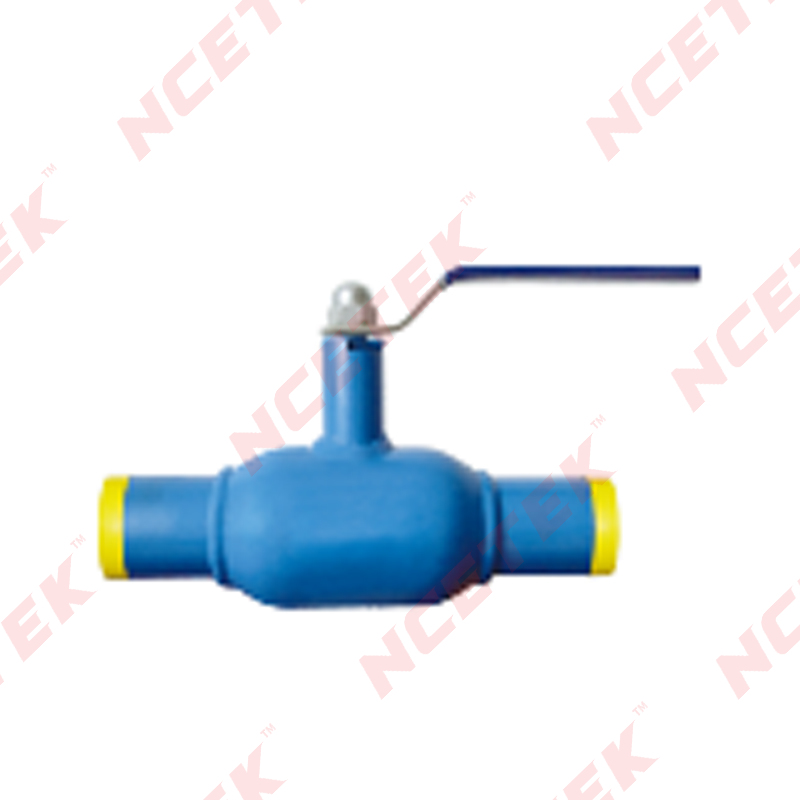
Inside the valve, the floating ball is the part that reacts directly to pressure. It does not stay fixed. It shifts slightly depending on how much force is coming through the pipeline.
When flow enters, pressure pushes the ball toward the sealing seat. That movement increases contact pressure and reduces the chance of leakage. When flow slows down or stops, pressure drops and the ball relaxes, allowing smoother movement for the next cycle.
The result is a kind of self-adjusting behavior that follows pressure instead of resisting it.
In operation, this usually shows up as:
There is no external control needed for this adjustment. It happens naturally inside the valve body as conditions change.
In a working pipeline, flow control is not only about stopping or allowing movement. It is also about keeping distribution stable across different sections. Pressure changes in one area often affect another, so control components need to respond in a coordinated way.
A Flanged Floating Ball Valve fits into this system by combining fixed positioning with internal flexibility. The flange keeps it steady in the pipeline, while the floating ball adjusts sealing behavior based on internal pressure.
In actual flow systems, its role often includes:
It becomes part of a wider network rather than acting alone. Each movement inside the valve reflects changes happening across the system.
Even when design stays the same, performance can still vary depending on how the valve is made. A Floating Ball Valve Manufacturer affects how closely each unit matches expected behavior in real operation.
Material consistency is one part of it. If the internal structure of components is not uniform, sealing contact may behave differently under pressure. Machining accuracy is another factor, especially for the ball and seat surfaces, where small differences can affect movement smoothness.
Assembly alignment also matters. If parts are not positioned correctly during assembly, the floating ball may not respond evenly when pressure changes inside the system.
Key points usually include:
| Manufacturing factor | What it affects in operation |
|---|---|
| Material consistency | Structural stability under pressure |
| Machining quality | Smooth internal movement |
| Assembly alignment | Sealing balance during use |
| Process control | Repeatable operating behavior |
When these parts are handled with care, valve behavior tends to stay more predictable once it is installed in a real pipeline system.
In industrial pipeline work, an API Floating Ball Valve is usually discussed in connection with how steady its behavior stays when conditions repeat again and again. The structure itself does not change much from other floating ball designs, yet what matters in real operation is how it behaves once pressure, flow, and temperature start cycling through the system.
Inside the valve, the floating ball still shifts according to pressure. Sealing still depends on how the ball presses against the seat. In practice, the focus is not on how it looks or how it is labeled, but on whether it keeps reacting in a similar way each time the system runs.
In many working setups, expectations are fairly direct:
Nothing inside the valve works in isolation. Each part reacts to what the pipeline is doing at that moment.
Once the valve is placed into a pipeline, installation quality starts to influence everything that comes after. A Flanged Floating Ball Valve depends heavily on how well the flanges line up with the pipe ends. If alignment drifts even slightly, the internal load does not spread evenly anymore.
Flange connection does offer some flexibility during setup, which helps correct small deviations before final tightening. Still, once the system is running, any unevenness at the connection point begins to show through pressure behavior.
Welding around adjacent pipeline sections, surface preparation, and bolt tightening all quietly contribute to how stable the valve feels later. These details are easy to overlook during assembly, yet they become part of the working condition once flow begins.
Common field situations include:
After operation starts, these conditions do not stay separate. They mix into the flow behavior and slowly affect how the valve responds under pressure changes.
In real service, the valve is exposed to changing conditions rather than a single stable state. Flow moves in cycles. Pressure rises and falls depending on system demand. A Flanged Floating Ball Valve follows these changes through its internal floating mechanism.
Over time, flow behavior inside the pipeline leaves marks on the valve. Not in a visible way at first, but in how smoothly it opens, closes, and seals under pressure.
Medium type also plays a role. Clean flow behaves differently compared to flow carrying small particles or varying density. Each type leaves a slightly different pattern of wear inside the sealing area.
Temperature shifts add another slow influence. Expansion and contraction do not change the structure suddenly, but over long operation periods they can affect how surfaces meet during sealing.
In everyday operation, what usually matters is:
These effects build up quietly rather than appearing all at once.
Maintenance in flow systems is not always about fixing visible issues. In many cases, it is about watching small changes before they grow into something harder to control. A Flanged Floating Ball Valve benefits from this kind of steady attention.
Sealing surfaces are usually checked during routine stops. Even a small change in contact feel can indicate that pressure distribution inside the valve is starting to shift.
Inside the flow passage, residue can build up depending on what moves through the system. Over time, that buildup may change resistance slightly, which then affects movement inside the valve.
The surrounding pipeline also matters. When pipes vibrate or shift slightly under load, that movement can transfer into the valve body and change alignment in a slow, gradual way.
In practical environments, maintenance often looks like:
None of these actions changes the design itself. They simply help the system stay closer to its original working balance.
A Flanged Floating Ball Valve ends up working as part of a larger system rather than a separate unit. Flange connection keeps it positioned inside the pipeline, while the floating ball responds to pressure changes that happen during operation.
How the valve behaves in real use is shaped by design, manufacturing consistency from a Floating Ball Valve Manufacturer, and how it is installed in the pipeline network. When API Floating Ball Valve requirements are involved, attention often shifts toward repeatable behavior and stable response during long-term use.
Over time, the valve adapts quietly to the system it sits in. Pressure cycles, flow changes, and temperature variation all leave small influences, and those influences gradually define how the valve performs in actual working conditions.
 nce@cnnsv.com
 +86-15727968392 / +86-15397375798
 +86-577-67091815
 +86-577-67091815
 Dongou Industrial Zone, Oubei Street, Yongjia County, Wenzhou City, Zhejiang Province, China


Contact Us