
 русский
 简体中文
简体中文

A pipeline may appear stable from the outside, yet every temperature change creates movement inside the metal. Heat causes expansion. Cold causes contraction. Neither process happens dramatically in a single moment. The change is gradual, repeating day after day as operating conditions shift.
For valves, the challenge goes beyond opening and closing. Internal parts must remain aligned while metal dimensions are constantly changing. Sealing surfaces need to stay in contact. Flow passages need to remain stable. Connection areas need to resist stress that develops over long operating periods.
A small amount of movement spread across an entire system may not attract attention. Repeated cycles over many years tell a different story. Areas where materials meet often experience greater stress than solid sections of metal. Because of that, valve body design becomes an important part of system reliability.
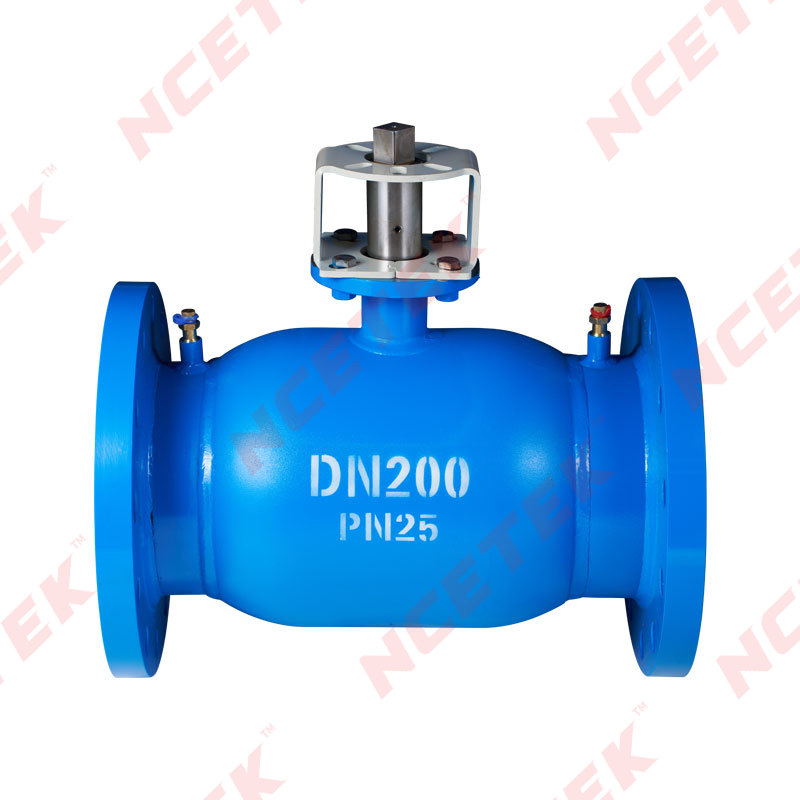
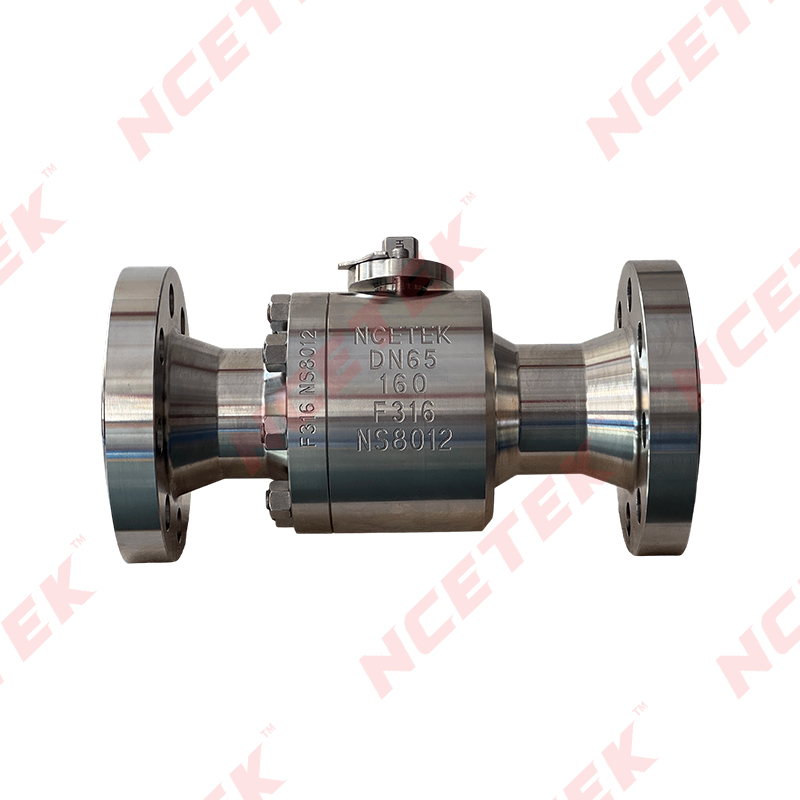
A Full Welded Ball Valve is often selected for environments where temperature conditions place continuous demands on pipeline components. Rather than relying on multiple body sections connected together, the valve body is formed as a welded structure. Fewer body joints mean fewer locations where thermal movement can accumulate stress.
Metal is never completely motionless. Even when movement cannot be seen, it still occurs.
In warm conditions, the material expands. In cold conditions, it contracts. When a pipeline transports media at elevated temperatures, surrounding components absorb part of that heat. The entire structure responds.
The opposite happens in cryogenic environments. Material contracts as temperature drops. Clearances become smaller. Contact pressure between parts may change.
Repeated thermal cycles create a pattern.
The sequence often looks like:
Each cycle may be small. Thousands of cycles create cumulative effects.
A valve designed for stable temperature conditions may behave differently when exposed to constant thermal fluctuation. Internal stress does not disappear immediately after temperatures return to normal. Some areas continue carrying load created during earlier cycles.
For that reason, engineers often pay attention to how stress travels through the valve body rather than focusing only on pressure ratings.
Imagine bending a single metal bar.
Now imagine bending several shorter bars connected together.
The force does not travel through both structures in the same way.
A continuous welded body allows stress to move across the structure more evenly. Areas where separate sections meet often become locations where stress gathers. Removing some of those transition points changes how the load spreads through the valve.
A Full Welded Ball Valve uses a body structure that minimizes external body joints. That design does not eliminate thermal stress. No valve can completely avoid temperature effects. What changes is the way the structure responds to them.
Under operating conditions, force tends to spread through the valve shell instead of concentrating around multiple body connections.
Practical advantages often include:
The benefit becomes easier to understand in systems where maintenance access is limited. A valve installed deep inside a network may remain in service for long periods. Structural continuity becomes increasingly valuable in those situations.
Heat affects every metal component in a pipeline. The question is not whether expansion will occur. The question is how the valve handles it.
When hot media moves through a valve, thermal energy spreads into the body. Internal surfaces warm gradually. Outer surfaces follow.
A segmented structure may experience slightly different expansion rates at various connection areas. A welded body tends to respond more uniformly because the structure behaves as a single unit.
Inside the valve, the ball, seats, and surrounding housing all react to temperature.
Several things happen at the same time:
None of these changes automatically create problems. They simply become part of normal operation.
The value of a Full Welded Ball Valve in such environments comes from structural consistency. Expansion happens across the body rather than around numerous separate body connections.
Operators often prefer predictable behavior over dramatic performance claims. Predictability allows maintenance planning, inspection scheduling, and long-term operation to become easier.
Cold environments create challenges that differ from heat-related conditions.
Many people assume cold operation is easier because thermal energy is lower. In reality, extremely low temperatures place unique demands on materials.
As temperature falls, metal contracts. Material properties may also change. Components that move freely under moderate conditions can behave differently once contraction occurs.
Sealing surfaces become particularly important.
A small dimensional change that appears insignificant at room temperature may have greater influence when operating in cryogenic service.
Within a Full Welded Ball Valve, contraction occurs throughout the body. Since the structure is continuous, dimensional changes tend to remain more uniform.
Several characteristics become important:
Flow control equipment used in low-temperature service must continue operating despite these changing conditions.
The challenge is not simply surviving cold exposure. The challenge is maintaining functional performance while materials respond to that exposure.
A valve expected to work across a wide temperature range depends on more than one design feature.
Body construction plays an important role, though internal geometry matters as well.
Wall thickness distribution influences how heat and cold travel through the structure. Large differences between sections may create uneven thermal response.
Flow passage design also contributes. Abrupt internal transitions can influence pressure behavior and local stress conditions.
Several design considerations work together:
| Structural Feature | Role in Temperature Response |
|---|---|
| Welded body form | Reduces joint-related stress points |
| Even wall distribution | Balances expansion and contraction |
| Smooth internal channel | Supports steady flow behavior |
| Symmetrical layout | Limits uneven thermal stress |
| Continuous sealing surface | Maintains contact stability |
No single feature determines performance alone. The combined effect of multiple design choices shapes long-term behavior.
The word "welded" describes a construction method, though welding quality determines how effective that construction becomes.
Two valves may share a similar appearance while responding differently during operation. The difference often comes from manufacturing consistency.
A weld becomes part of the structure itself. During heating and cooling cycles, the weld experiences the same expansion and contraction affecting the surrounding material.
For that reason, uniform welding is important.
Areas with uneven stress distribution may respond differently over time than areas where load is spread smoothly.
A Welded Ball Valve Supplier generally pays attention to factors such as:
Long service life is often connected to details that are difficult to notice during a simple visual inspection.
The quality of a welded structure reveals itself gradually through years of operation rather than during a brief observation period.
Different pipeline systems face different operating conditions.
In some installations, maintenance access is easy. Components can be inspected frequently. Replacement work can be completed without major disruption.
Other systems operate under very different circumstances.
Examples include:
Under those conditions, body structure becomes an important consideration.
A Full Welded Ball Valve is often selected because the design focuses on structural continuity. The goal is not to eliminate temperature effects. Temperature will always influence metal. The objective is to manage those effects in a predictable and stable way throughout the service life of the system.
Even a well-designed valve can face difficulties when installation conditions are overlooked. Temperature-related performance begins long before the system enters operation. It starts when the valve becomes part of the pipeline.
Alignment is one of the areas that receives attention during installation. A pipeline naturally carries its own weight. Additional force may come from supports, nearby equipment, or thermal movement within the system. When a valve is installed between sections that are slightly out of position, extra stress can develop inside the body.
At normal temperatures, such stress may remain unnoticed. Once heat expansion or cold contraction begins, the load can increase.
Several installation details deserve consideration:
A pipeline functions as a complete structure. Performance depends on how individual components work together rather than on any single part alone.
Many discussions focus on high temperatures or cryogenic conditions as separate environments. Real operating systems often experience continuous transitions between different thermal states.
A valve may warm up during operation and cool down later. Another system may move through repeated temperature fluctuations as operating demands change.
Thermal cycling gradually influences the structure.
During heating:
During cooling:
One cycle may have little visible effect. Repeated cycles over long periods create a different situation.
Engineers often evaluate how components respond not only to temperature itself but also to the frequency of temperature change. Consistent thermal movement can place demands on materials, welds, and sealing interfaces.
The value of a Full Welded Ball Valve in such environments often comes from its ability to distribute those stresses through a continuous structure rather than concentrating them at multiple body joints.
Long-distance pipelines present challenges that differ from compact industrial installations.
Inspection points may be spread across large areas. Access can become more difficult. Maintenance planning often focuses on reducing unnecessary intervention whenever possible.
In such systems, body construction becomes an important consideration.
A Full Welded Ball Valve reduces the number of external body connection locations compared with designs that use multiple assembled sections. Fewer body joints often simplify the external structure.
That characteristic can be useful in environments where:
The goal is not to avoid maintenance completely. Every mechanical system requires inspection and observation. The objective is to support consistent operation across extended service periods.
Maintenance practices vary according to operating conditions, though several inspection habits appear regularly in high-temperature systems.
External surfaces are often examined for visible signs of stress. Connection areas may be checked for changes that develop during long-term operation. Operators also pay attention to how smoothly the valve moves during opening and closing procedures.
Common inspection areas include:
Changes tend to appear gradually rather than suddenly.
A slight increase in operating resistance may indicate normal wear. Surface discoloration may reflect exposure to elevated temperatures. Observations collected over time often provide a clearer picture than a single inspection.
Cryogenic environments create a different maintenance focus.
Low temperatures influence material behavior in ways that may not appear in warmer operating conditions. Inspection often concentrates on stability, sealing behavior, and overall system consistency.
Areas commonly reviewed include:
Observation remains important because cryogenic systems may experience gradual changes that develop over long operating periods.
Maintenance teams often value predictable performance. Consistency helps simplify planning and supports reliable operation across changing conditions.
Valve selection rarely begins with a catalog page alone.
Pipeline conditions, temperature range, installation layout, and operating requirements all influence the final choice. A Welded Ball Valve Supplier often participates in the process by helping match valve characteristics to system needs.
Several factors are typically considered:
Selection becomes more effective when the valve is viewed as part of a larger system rather than as an isolated product.
A suitable match between valve design and operating environment often supports smoother installation and more predictable long-term behavior.
External appearance can reveal certain manufacturing details, though long-term performance depends far more on structural consistency.
A valve operating in demanding temperature conditions relies on:
Many of these characteristics remain invisible once the valve enters service.
Heat, cold, pressure, and thermal cycling continuously interact with the structure. Components that maintain stability during those conditions often contribute to more predictable system performance over time.
For that reason, attention frequently shifts from surface appearance to construction quality and structural continuity.
Temperature adaptability is not created by a single feature.
Body construction, welding consistency, internal geometry, and material behavior all work together. A Full Welded Ball Valve combines those elements within a continuous structural form that helps manage thermal stress throughout the valve body.
In high-temperature environments, the design supports more uniform expansion. In cryogenic conditions, contraction occurs across a continuous structure rather than through numerous separate body sections.
Over years of operation, temperature changes become a routine part of system life. Components that respond in a stable and predictable manner help support overall pipeline performance.
A Full Welded Ball Valve is often associated with such environments because its design focuses on structural continuity, controlled stress distribution, and stable sealing behavior under changing thermal conditions. A Welded Ball Valve Supplier contributes to that process by helping align valve selection with the practical demands of the system where it will operate.
Across both hot and cryogenic service, the underlying principle remains similar: managing temperature-related movement in a way that allows the pipeline to continue operating smoothly through repeated cycles of expansion and contraction.
 nce@cnnsv.com
 +86-15727968392 / +86-15397375798
 +86-577-67091815
 +86-577-67091815
 Dongou Industrial Zone, Oubei Street, Yongjia County, Wenzhou City, Zhejiang Province, China


Contact Us