
 русский
 简体中文
简体中文

In many valve production environments, work rarely follows a simple straight pattern. Different projects come in with different needs, and the factory usually adjusts details along the way instead of repeating exactly the same steps every time.
In some industry discussions around customized valve production, Zhejiang Naishi Valve Co., Ltd. is sometimes mentioned when people talk about how different manufacturing requirements are handled within the same production space.
A Valve Custom Factory often works in this flexible way. It is less about producing one fixed structure in large repetition, and more about adjusting parts, materials, and assembly behavior depending on where the valve will actually be used.
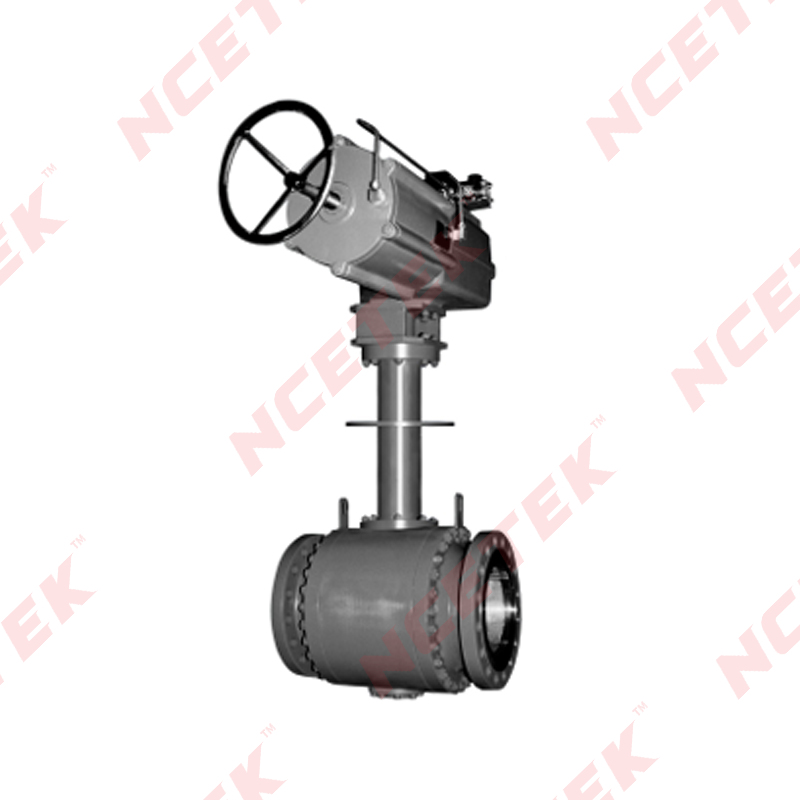
In practice, valve production is not always a uniform process. Even when the base design looks similar, small differences are often introduced during manufacturing.
These differences are not always obvious from the outside. They usually appear in how parts are shaped, how tightly components fit together, or how movement feels when the valve is operated.
Inside a Valve Custom Factory, it is common to see production shifting slightly depending on requirements such as:
Instead of changing the whole structure, small adjustments are made at different points in the process. Over time, this becomes a normal part of the workflow.
Cryogenic environments are usually described as situations where temperatures drop far below what most standard industrial systems deal with. In these conditions, materials and fluids do not behave in the same steady way they normally would.
What tends to change is not only the flow itself, but also how materials react internally. Metal parts may slightly contract, and sealing surfaces may behave differently when pressure and temperature shift together.
Because of this, components used in such systems often need to be designed with extra attention to how they behave over time rather than just how they look or fit at the start.
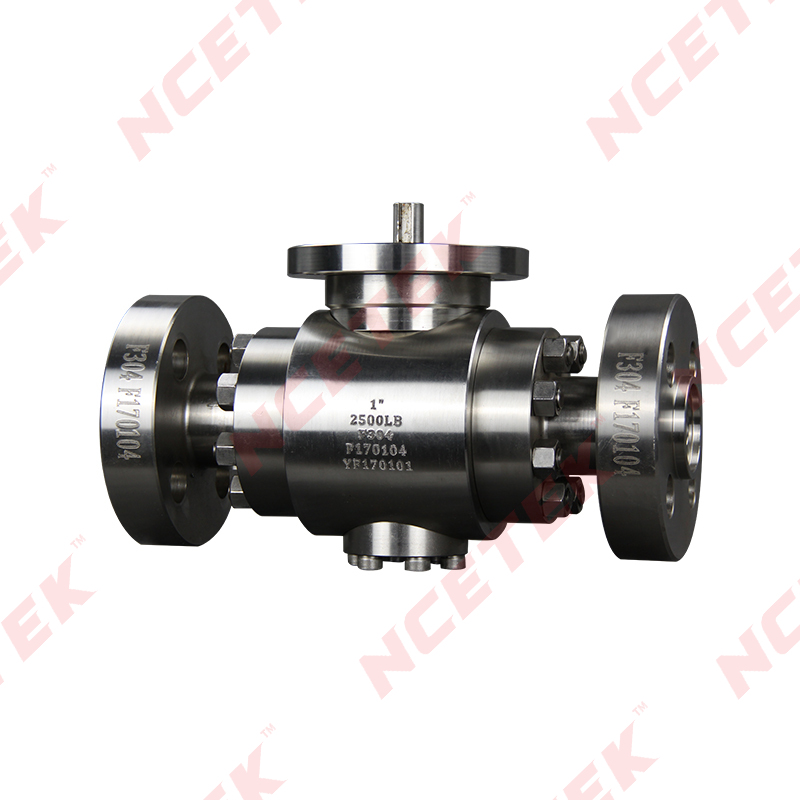
Cryogenic Ball Valve Design is not a single fixed structure. It is more like a set of adjustments applied to a basic valve concept so that it can still function in low-temperature environments.
The internal structure usually still follows the same general idea of a rotating ball controlling flow, but the way parts interact is adjusted to handle temperature changes more smoothly.
Inside this kind of design, attention is often placed on:
Instead of focusing on a single function, the design tries to keep the whole system stable when conditions are not consistent.
When cryogenic requirements are involved, production inside a Valve Custom Factory usually shifts slightly compared to standard valve work.
It is not a completely different process, but more like adding careful adjustments at different stages.
This can include:
These changes are usually small individually, but together they help the valve behave more reliably in low-temperature environments.
One of the most noticeable aspects in cryogenic use is how materials respond when the temperature drops. Metal parts do not always stay the same in size or flexibility, and sealing materials may also react differently.
In real operation, this can show up as:
These changes are usually not sudden. They tend to appear slowly as the system continues running.
| Condition | Material behavior | Movement feel | Sealing behavior |
|---|---|---|---|
| Normal use | Stable response | Smooth and predictable | Even contact |
| Low-temperature use | Slight contraction tendency | Slight resistance changes | Needs structural balance |
| Changing conditions | Mixed response | Gradual variation | Depends on adaptation level |
This kind of difference is often what drives the need for design adjustment in cryogenic systems.
Inside a cryogenic ball valve, movement is not just about opening and closing flow. It also reflects how internal parts respond to environmental changes.
When operating under low-temperature conditions, the rotation of internal parts may feel slightly different compared to normal systems. This is not usually abrupt, but more like a gradual shift in resistance or smoothness.
What is often observed during use includes:
overall movement staying functional but less uniform than normal conditions
These details are usually noticed over repeated operation rather than a single action.
When cryogenic valves are used over long periods, their behavior is usually not defined by a single moment of operation, but by gradual changes that appear during repeated cycles.
Inside real pipeline systems, conditions are rarely completely stable. Temperature shifts, pressure differences, and flow variations can all influence how the valve behaves over time.
A Cryogenic Ball Valve Design is expected to handle these changes without losing basic movement stability. The structure does not need to react instantly to every change, but it should stay consistent enough that operation does not feel unpredictable.
What is often noticed in long-term use includes:
These changes usually develop slowly rather than appearing suddenly.
Inside cryogenic pipelines, flow is not only about movement of fluid from one point to another. It also interacts with internal surfaces of valves in a way that depends heavily on temperature conditions.
When a valve opens or closes in these environments, the response of the system can feel slightly different compared to standard conditions. This is because both fluid and structure react together under low-temperature influence.
In practical use, flow response is often observed through:
These behaviors are not isolated events but part of continuous system interaction.
Inside a Valve Custom Factory, cryogenic-related production is rarely treated as a separate category. Instead, it is handled through gradual adjustment across existing production steps.
This means that the same basic manufacturing flow is used, but with small variations depending on the intended operating environment.
In practice, this can involve:
These adjustments are often subtle but influence how the valve behaves after installation.
In cryogenic environments, materials inside the valve do not behave independently. They interact with each other under temperature influence, and this interaction becomes more noticeable over time.
For example, metal parts and sealing elements may not expand or contract in the same way. This difference can slowly affect how tightly components stay in contact during repeated movement.
In real operating conditions, this interaction can be seen as:
These effects are usually part of long-term system behavior rather than immediate response.
Instead of looking at Cryogenic Ball Valve Design as a fixed structure, it is more accurate to observe it as a system that reacts slowly to its environment.
The design does not only define how the valve looks or fits, but also how it behaves when conditions shift during operation.
Over time, what becomes noticeable is not a single change, but a pattern of small adjustments happening repeatedly in different parts of the system.
These include:
| Aspect | Normal condition | Cryogenic condition | Observed behavior |
|---|---|---|---|
| Material response | Stable | Contraction tendency | Gradual structural change |
| Movement feel | Consistent | Slight variation | Adjusting resistance |
| Sealing contact | Even | Sensitive to change | Requires balance |
| Operation cycle | Uniform | Variable influence | Long-term adaptation |
This comparison reflects how environmental conditions influence system behavior over time.
Beyond initial production, a Valve Custom Factory indirectly influences how valves behave during long-term operation. This is not through direct control in the field, but through how components are designed and assembled before installation.
Small differences in manufacturing decisions can affect how the valve responds after it is placed into a real system.
In practical terms, this includes:
These factors together shape how stable the valve feels in actual operation.
Once installed, cryogenic ball valves become part of a larger system where multiple components interact continuously. Their performance is influenced not only by their own structure but also by surrounding pipeline conditions.
In real environments, integration involves:
Over time, valves become part of the system rhythm rather than standalone components.
When looking at both Valve Custom Factory environments and Cryogenic Ball Valve Design together, the connection between manufacturing and real-world operation becomes more visible.
The factory side focuses on shaping and adjusting structure based on expected conditions, while the cryogenic design side deals with how those structures behave when exposed to low-temperature environments.
Together, they form a continuous cycle where design decisions, material behavior, and operational response all influence each other in long-term industrial use.
In many modern industrial systems, this relationship is not static. It continues to adjust gradually as requirements evolve and as systems operate under different conditions over time.
 nce@cnnsv.com
 +86-15727968392 / +86-15397375798
 +86-577-67091815
 +86-577-67091815
 Dongou Industrial Zone, Oubei Street, Yongjia County, Wenzhou City, Zhejiang Province, China


Contact Us