
 русский
 简体中文
简体中文

In pipeline work, Flanged Floating Ball Valve systems are often placed where flow needs to stay steady while switching on and off remains simple. Inside the valve body, a floating ball moves with fluid pressure rather than rotating on a fixed axis. Position is formed by balance between upstream force, downstream resistance, and seat contact.
During real operation, flow does not stay perfectly even. Small changes appear when pumps adjust, when upstream demand shifts, or when pipeline branches open and close. Each change reaches the valve chamber and slightly changes how the ball sits inside.
Flange connection at both ends keeps the valve tied closely to the pipeline. In practical installation, pipes are rarely under completely neutral stress. Support distance, pipe weight, and small installation offsets all influence how force travels into the valve body. Flanged structure spreads that force around the joint area, helping reduce sudden local distortion.
Inside a Floating Ball Valve Manufacturer working environment, attention often goes beyond simple open and close behavior. Long service flow requires the internal ball to stay stable under repeated small pressure changes, not just under single switching actions.
Even when system looks still from outside, fluid inside continues to push, adjust, and settle around the ball surface.
Floating ball movement depends on pressure difference across the valve. When upstream pressure rises, ball moves gently toward the seat on the opposite side. When pressure drops, contact force reduces and ball shifts slightly away from tight sealing contact.
Movement is not large. It stays within a narrow range, controlled by internal space and seat structure. Still, that small shift affects how fluid passes through the opening area.
In field conditions, pressure rarely stays constant for long periods. Flow demand changes, pump output fluctuates, and pipeline direction may redirect part of the flow. Each change creates a small force variation inside the valve chamber.
Typical behavior seen during operation:
These movements remain subtle, yet they form the base of how sealing and flow control stay balanced.
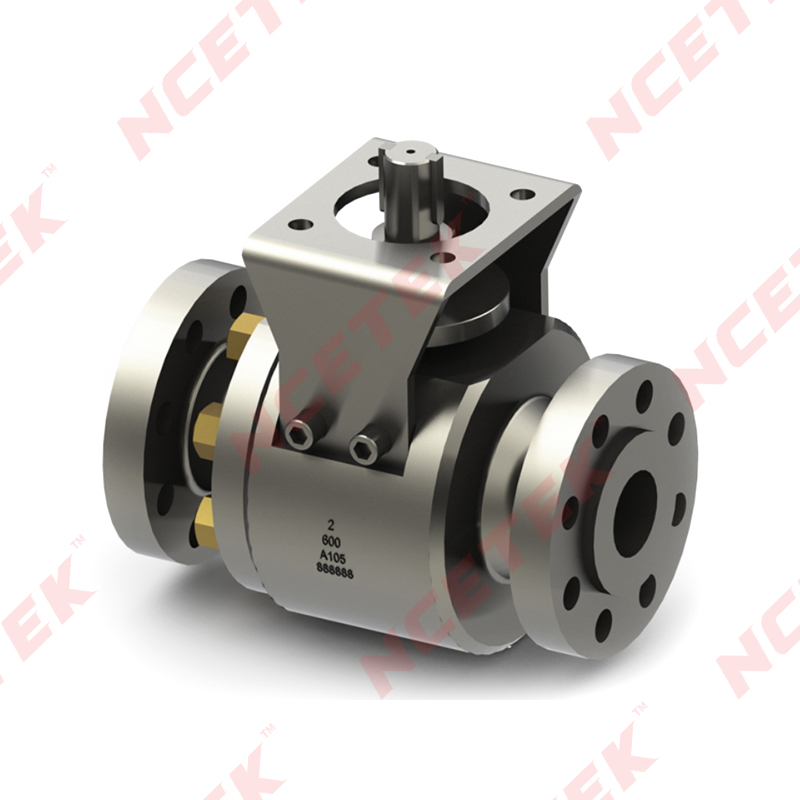
Flange connection is not only a joining method. It also decides how external pipe stress enters the valve body. In Flanged Floating Ball Valve systems, alignment between pipe and valve affects internal contact conditions.
When flange surfaces sit evenly against each other, load spreads across a wider area. Valve body keeps its shape under pressure. Internal seat alignment stays close to designed position. Ball movement remains centered during flow changes.
Field installation often introduces small variation. Pipe sections may not line up perfectly. Tightening force may vary slightly around bolt circle. These small differences change how stress is distributed.
Practical field influences include:
Seat rings inside Flanged Floating Ball Valve form the main sealing interface. Ball surface presses against seat material when flow is blocked or partially restricted. Contact pressure changes depending on upstream force and internal balance.
In real operation, seat contact is not static. It adjusts slightly each time pressure changes. Ball does not sit in one fixed position all the time. Instead, it finds a resting point based on current flow condition.
Over repeated cycles, seat material also responds. Slight surface adaptation appears, changing how ball settles during contact. This does not stop sealing function, though it influences how positioning behaves over time.
Common field observations:
These small changes are part of normal working behavior in continuous flow systems.
Flow entering Flanged Floating Ball Valve does not remain uniform. Direction changes around the ball surface, creating internal turbulence. Flow path adjusts continuously depending on opening level and pressure difference.
When flow remains steady, internal forces stay balanced and ball position remains stable. When flow changes quickly, turbulence becomes stronger, and ball may shift slightly before settling again.
In pipeline systems with variable demand, flow condition changes more often. Each change affects how fluid pushes around the ball.
Field-related flow behavior:
This balance between turbulence and pressure recovery plays a direct role in maintaining flow stability inside the valve chamber.
| System Area | Field Condition | Resulting Behavior |
|---|---|---|
| Ball Movement | Pressure change | Micro position shift |
| Flange Joint | Pipe stress transfer | Body alignment variation |
| Seat Contact | Repeated compression | Contact line adjustment |
| Flow Path | Turbulence variation | Temporary instability |
| Pipeline Load | External force | Structural shift inside valve |
| Installation Condition | Alignment deviation | Long-term positioning drift |
Pipeline temperature never stays completely still in real operation. Flowing media carries heat, surrounding environment shifts during day and night, and metal parts inside the line respond in their own slow way. In a Flanged Floating Ball Valve setup, these changes travel through pipe walls and reach the valve body through flange contact.
Metal expansion does not show itself in a clear motion. It appears as a quiet push or pull along the pipeline. One section grows slightly longer, another contracts after cooling. That small movement passes through supports and finally reaches the valve housing.
Once force enters the valve body, seat position and ball contact line adjust in a very small range. The valve still works normally, though internal seating does not stay exactly at one fixed point during long cycles.
Field observations linked with thermal movement:
Inside a Floating Ball Valve Manufacturer perspective, thermal movement is not treated as a separate event. It is part of the pipeline behavior that keeps transferring force during every operating stage.
Valve movement depends on how force enters the stem and reaches the ball. In field use, actuation is rarely identical from one operation to another. Hand force varies slightly. In automated setups, response timing and mechanical inertia add their own differences.
During rotation, the ball does not jump directly into final position. It moves step by step, guided by seat resistance and fluid pressure inside the chamber. When flow is present, resistance changes the feel of movement and final seating position.
In repeated operation, small differences start to show in how the valve closes or opens.
Common field behavior:
These small differences do not stop function. They influence how stable positioning feels during frequent switching in real systems.
On site installation often decides how well Flanged Floating Ball Valve behaves later. Pipes are not always perfectly aligned. Some sections carry weight from long horizontal runs. Others sit under slight tension from support points.
When valve is installed between these sections, flange contact becomes the point where all force meets. Even a small mismatch changes how stress spreads into the valve body.
Over time, that stress becomes part of daily operation behavior rather than installation stage alone.
Field-related installation influences:
In many Floating Ball Valve Manufacturer applications, installation condition is treated as part of long-term performance, since once system starts running, pipe movement continues interacting with valve body.
Inside long-running pipeline systems, wear appears slowly. Seat rings and ball surfaces keep touching during every open and close cycle. Contact marks build up in a gradual way rather than sudden change.
Maintenance work often reveals what normal operation hides. Slight seat wear, minor surface marks, and small alignment drift become more visible during inspection periods.
Even when valve still performs normally, internal positioning may not match early installation condition exactly.
Field-related maintenance behavior:
These changes are not abrupt. They build quietly and show up during routine checks or flow variation in operation.
Flanged Floating Ball Valve works as part of a wider pipeline network. It does not only respond to local flow, it also reacts to movement coming from connected sections.
A change in pressure upstream can travel through several pipe segments before reaching the valve. Vibration from pumps or other equipment also moves through the same structure. Each of these influences reaches the valve body in a slightly different form.
Inside the valve chamber, all these forces meet and affect how the ball sits in the seat.
Common interaction behavior in field conditions:
Because of this, valve position accuracy is never isolated. It reflects the condition of the whole pipeline system connected to it.
During long continuous running, Flanged Floating Ball Valve often appears stable from outside view. Flow remains steady, switching continues without interruption, and pipeline operation looks uniform.
Inside the valve, small movements keep happening. Ball position adjusts slightly with pressure changes, flow direction shifts, and structural influence from pipeline movement. These adjustments stay within a narrow range, though they repeat many times during operation.
Stability is not a fixed state. It is maintained through continuous small balancing actions inside the valve chamber.
Field behavior during long operation:
Over time, Flanged Floating Ball Valve behavior reflects a combination of mechanical structure, fluid movement, and pipeline condition working together in one connected system.
 nce@cnnsv.com
 +86-15727968392 / +86-15397375798
 +86-577-67091815
 +86-577-67091815
 Dongou Industrial Zone, Oubei Street, Yongjia County, Wenzhou City, Zhejiang Province, China


Contact Us