
 русский
 简体中文
简体中文

A ball valve can look fairly simple from outside, with a body, an operating stem and a connection at each end. Inside, however, several parts need to remain in a fixed relationship while fluid passes through the valve. The body keeps those parts enclosed and provides the pressure boundary around the internal assembly.
A Full Welded Ball Valve uses welded joints to close and connect sections of its body rather than relying on removable body bolts. Once welding has been completed, the internal ball, seats and related parts sit inside a closed structure. Access to those components is therefore very different from access to components inside a bolted valve body. Fully welded construction is generally selected with a maintenance plan that does not depend on routine field opening of the pressure‑containing body.
That difference becomes important when internal inspection or repair is considered. Removing an actuator or checking an external operating part does not require the pressure‑containing shell to be opened. Reaching internal components is another matter.
A bolted body normally provides a mechanical separation point. Removing the fasteners can allow the body sections to come apart according to the valve design. A welded body does not provide the same type of opening. Access may require cutting through a welded area, followed by internal work and a controlled process for restoring the body.
For that reason, the repair route begins with a structural question rather than a simple request to remove a few fasteners: Where can the closed body be opened without causing unnecessary damage to the parts inside?
A welded valve body is assembled from separate sections during manufacturing, with welds joining the sections into a closed structure. Once the joints have been completed and inspected, the internal components remain enclosed within the body.
Inside a ball valve, the main working relationship involves the ball, seats and stem. Turning the stem changes the position of the ball, allowing the passage to open or close. Seats remain around the ball and help maintain the required sealing relationship.
None of those internal parts needs to be exposed during normal operation. In fact, keeping the internal assembly enclosed is part of the basic purpose of the body structure.
A simplified arrangement looks like this:
Body → internal ball and seats → stem connection → operating mechanism
Each section has a different role. The body contains the internal assembly, the ball controls flow, the seats maintain contact around the ball, and the stem transfers the operating movement.
Welding changes how the body itself can later be separated. A welded seam is intended to form a permanent structural connection, so it does not behave like a bolt that can simply be loosened and removed.
Some fully welded designs use a floating ball arrangement, where the ball is supported by the surrounding seats rather than being fixed by a separate lower support structure. Such designs can still have a welded outer body, meaning the internal movement arrangement and the body connection method remain two separate design considerations.
Understanding that distinction helps explain why a Fully Welded Floating Ball Valve may have movable internal parts while still requiring a different approach to body access.
A bolted valve body has a clear mechanical joint. Fasteners hold the sections together, and removing them can separate the sections without cutting the pressure‑containing body.
A welded construction works differently. Welding joins the body sections into a continuous structure, leaving no ordinary body flange that can be opened with a wrench. As a result, cutting becomes part of the access process when internal disassembly is genuinely required.
Cutting a welded body also creates several new concerns. The opening process needs to avoid unnecessary damage to the ball, seats, stem and nearby surfaces. Heat or mechanical force introduced during the work can affect components that were originally installed and aligned during manufacturing.
A useful comparison is:
| Body Construction | Normal Access Method | Main Maintenance Consideration |
|---|---|---|
| Bolted body | Remove body fasteners | Body can be separated according to its design |
| Welded body | Welded area must be processed | Body restoration becomes part of the repair |
| Welded floating ball design | Internal parts remain enclosed | Ball and seat relationship needs careful handling |
A welded body should therefore not be treated as a bolted valve with fewer screws. Its construction changes the entire sequence of internal repair.
Some sources describe fully welded bodies as unsuitable for routine field repair, while other designs include specific arrangements for emergency seat or stem‑related service without opening the complete body. Such differences depend on the valve construction and intended maintenance method.
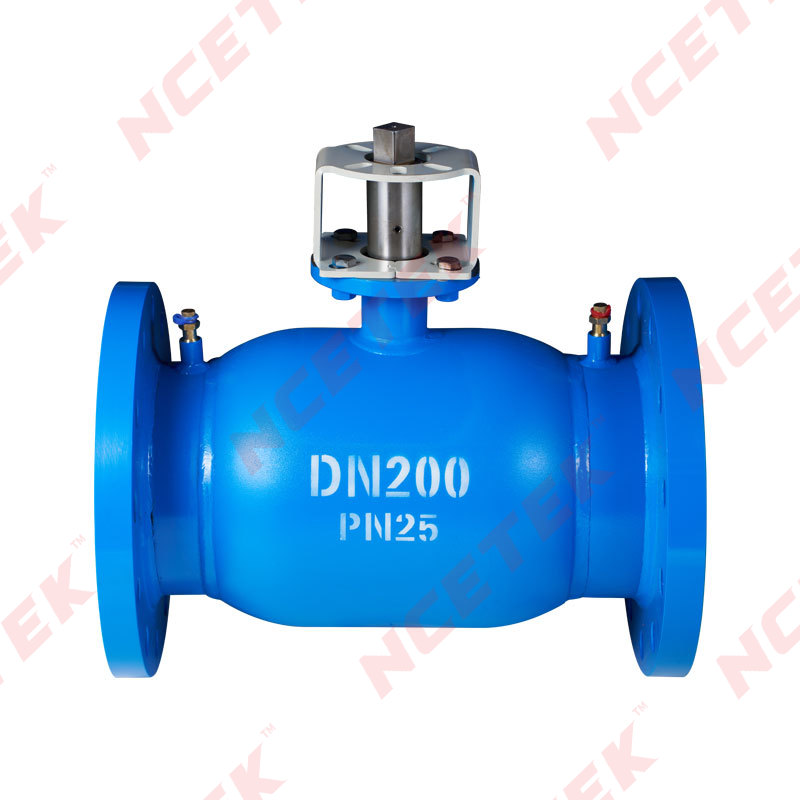
Internal inspection usually starts with a clear reason. A change in operation, suspected sealing problem or unusual resistance may lead to further investigation. External checks should come before any decision to disturb the welded body.
The stem, operating device, external connections and accessible sealing areas can often be examined without opening the pressure‑containing shell. Checking those areas first helps separate an external operating issue from a problem that may actually involve the internal assembly.
When an internal component does require attention, the process becomes more involved. The valve needs to be removed from service and made safe before any cutting or opening work begins. Residual pressure or trapped fluid must not remain inside during disassembly.
After safe isolation, the maintenance route depends on the valve's design and the suspected problem. Internal components may include:
Each part has a specific position, so removing one component can affect the arrangement of nearby parts. Careful handling becomes important around sealing surfaces, since scratches or deformation may create another problem during reassembly.
For a fully welded body, internal repair is therefore not simply a matter of reaching the faulty part. Body access, component removal, inspection, replacement and restoration all form part of one process.
A Fully Welded Floating Ball Valve combines two different structural ideas: a welded outer body and a floating ball arrangement inside. The ball is not fixed in the same way as a supported ball design, and its relationship with the seats changes according to operating conditions.
Under normal operation, the ball needs to remain properly positioned between the seats so that rotation can control the flow passage. The stem provides the operating movement, while the seats maintain contact around the ball.
For maintenance, the floating arrangement introduces its own considerations. Once the outer body has been opened, the ball and seats need to be handled as parts of one assembly rather than as unrelated pieces. Removing or reinstalling one component without considering its mating surface can affect the final fit.
The welded body remains the larger limitation for access. Even though the ball itself is free to move within its designed range, the surrounding shell still forms a closed enclosure.
That distinction is useful when discussing disassembly:
One term does not replace the other. A valve can therefore have internal movement characteristics associated with a floating ball while still requiring a special process for opening its welded body.
For maintenance planning, both structural features need to be considered together rather than assuming that an internally movable ball automatically means easy access.
A welded body does more than hold internal parts in place. Weld locations also determine how the body can be approached during later repair work. Once a joint has been welded, access to the enclosed assembly becomes closely connected with the position and shape of that joint.
For maintenance planning, the location of a weld needs to be considered alongside nearby components. A cut made too close to a seat, ball or stem area could create unnecessary difficulty during internal work. Space around the working area also matters because technicians need enough room to inspect and handle components.
Some valve designs include extended sections or particular body arrangements that leave a more practical route for later service. Such choices are made during design rather than added after a problem appears. ( https://www.bossealvalves.com/news/fully‑welded‑ball‑valves‑installation‑disassembly.html?utm_source=chatgpt.com )
A sensible maintenance plan therefore asks several questions before any cutting begins:
A weld location that works well during assembly may not provide the same convenience during repair. Manufacturing and maintenance consequently need to be considered as connected stages.
Cutting into a welded valve should never be the starting point of fault investigation. External causes need to be checked before the pressure‑containing body is disturbed. Operating parts, stem movement, external connections and visible sealing areas can sometimes reveal a problem without requiring internal access.
Safety preparation is equally important. The valve needs to be isolated from the operating system, with pressure and retained fluid dealt with before any disassembly work begins. Cutting into an enclosed valve without proper preparation can create serious hazards.
A practical inspection sequence can include:
A Full Welded Ball Valve may require cutting and later rewelding when internal access is unavoidable, although the actual procedure depends on its construction and service condition.
Careful diagnosis can prevent unnecessary damage. Opening a welded body creates additional work, so a clear reason for internal access should exist before that route is chosen.
Opening a welded valve is only part of the maintenance process. Once the internal inspection or replacement work has been completed, the body needs to be restored as a complete pressure‑containing structure.
Reassembly requires attention to the original position of the internal components. Ball, seats and stem need to return to their intended relationship, while the body sections must also be positioned correctly before welding resumes.
Rewelding introduces another stage of inspection. The restored joint needs to be checked for proper connection and overall condition, while the valve may also require suitable testing before returning to service.
A simplified repair path can be viewed as:
Isolation → Inspection → Body opening → Internal repair → Reassembly → Rewelding → Testing
Each stage depends on the previous one. A repair that replaces an internal seat, for example, still needs correct body alignment and suitable restoration of the welded joint.
For a Fully Welded Floating Ball Valve, the relationship between the ball and seats needs particular care during reassembly. A floating ball relies on the surrounding seat arrangement for its working position, so incorrect placement can affect later operation.
Rewelding is therefore not simply closing a hole. It restores a structural boundary that needs to work with the internal assembly and the operating conditions of the valve.
Normal valve operation does not require access to the inside of the body. Turning the operating mechanism moves the stem, which rotates the ball and changes the flow passage. Internal parts remain enclosed throughout ordinary opening and closing.
Maintenance follows a different path because reaching those parts may require the body itself to be opened. A welded connection cannot be loosened in the same way as a removable mechanical joint, so internal repair involves structural work as well as component handling.
Routine care can therefore focus on areas that remain accessible:
Internal repair becomes a separate task when inspection indicates a problem that cannot be addressed externally.
For a Full Welded Ball Valve, that distinction is important during maintenance planning. Welded construction can provide a closed body structure during normal service, while internal access requires a different repair route. A Fully Welded Floating Ball Valve adds another consideration because the floating ball and seat arrangement must be preserved during internal handling.
From a manufacturing perspective, future repair needs are worth considering before the body is permanently joined. Weld locations, internal assembly order and available access space can all influence how maintenance work will be approached later. A clear record of the body structure and internal arrangement can also make diagnosis easier when service becomes necessary.
A welded valve is therefore not simply a valve that happens to have welded joints. Welding changes how the body is assembled, how internal parts remain enclosed and how repair work must proceed when access is required. Once that structural relationship is clear, the reason for cutting and later rewelding becomes easier to understand.
 nce@cnnsv.com
 +86-15727968392 / +86-15397375798
 +86-577-67091815
 +86-577-67091815
 Dongou Industrial Zone, Oubei Street, Yongjia County, Wenzhou City, Zhejiang Province, China


Contact Us