
 русский
 简体中文

Water pressure rarely stays still, and the changes can quietly alter what happens inside a pipeline. A properly selected Heat Resistant Ball Valve has to cope with pressure swings, mechanical loading and temperature shifts all at once. In water distribution networks and industrial process lines alike, unstable pressure can affect ball movement, seat contact, sealing consistency and operating torque. The effects grow more serious when a valve sees repeated pressure cycles or high temperatures. Once engineers understand how hydraulic conditions interact with valve construction, they can spot operating problems early, before they turn into failures. That understanding also gives a practical basis for choosing materials and sealing structures that fit the real demands of the system.
Pipeline pressure is seldom constant. Shifts in demand, pump behavior, flow resistance and valve position all create different pressure conditions along the system.
For industrial operators, stable pressure now ties closely to equipment reliability and preventive maintenance. Modern water management often includes pressure monitoring, which helps flag abnormal conditions and catch leaks or pipeline faults.
Several operating conditions can set off pressure fluctuations:
These factors can act alone or combine. A valve that runs well in stable conditions may face very different mechanical loads once the system becomes unsettled.
To read pressure conditions correctly, you need to tell static pressure from differential pressure.
Static pressure is the pressure the fluid exerts inside the system. Differential pressure is the difference between the upstream and downstream sides of a valve.
On a floating ball valve, differential pressure bears directly on ball loading and seat contact. When upstream pressure is higher than downstream, the resulting force pushes the floating ball toward the downstream seat. Any change in that difference alters the contact between the ball and the sealing parts.
A floating ball valve uses line pressure to help seal the ball against the downstream seat. Unlike a trunnion-mounted design, the ball has no separate mechanical anchor.
That makes pressure differential a key point in both selection and operation.
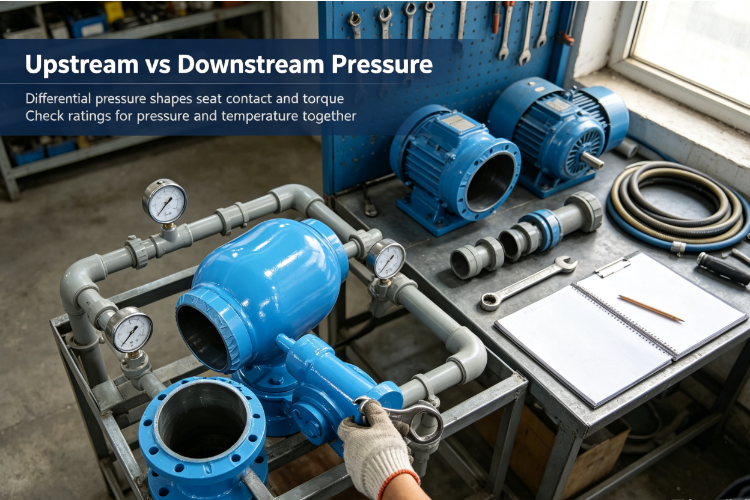
When fluid enters the valve, pressure acts on the ball surface. Under a pressure difference, the ball is forced toward the downstream seat. That movement brings ball and seat into contact and forms the sealing interface.
Changing pressure alters the forces on these parts:
How the valve actually responds depends on ball geometry, seat construction, material properties and operating conditions.
Sealing depends on how the ball surface meets the seat. When pressure changes, the contact force changes with it. This can affect sealing consistency, particularly when the valve goes through many pressure cycles.
Watch for these conditions:
Higher pressure doesn't automatically mean leakage. In some conditions, stronger pressure-assisted contact actually improves sealing. Trouble starts when the load goes beyond what the valve design or the sealing materials can handle.
Operating torque is the turning force needed to move the ball between open and closed.
As differential pressure rises, the ball may press harder on the downstream seat. The extra contact force raises friction between them.
Several factors set the torque requirement:
In automated installations, these same factors drive actuator sizing. An actuator chosen without the real differential pressure in mind may lack the force it needs, or may be loaded harder than necessary.
Pressure swings aren't always one-off events. Where pumps switch often or demand keeps changing, a valve goes through repeated loading cycles.
Over time, these conditions can affect the following:
| Component | Potential Pressure-Related Effect | Inspection Consideration |
|---|---|---|
| Valve ball | Repeated contact loading | Surface condition |
| Valve seat | Deformation and frictional wear | Sealing integrity |
| Valve stem | Changes in operating resistance | Rotation and alignment |
| Actuator | Higher torque demand | Operating capacity |
| Body connection | Mechanical stress | External leakage |
Regular inspection picks up changes in valve behavior before they disturb normal operation.
Pressure is only part of the picture. When a valve carries heated water or another hot medium, thermal conditions change how its internal parts behave mechanically.
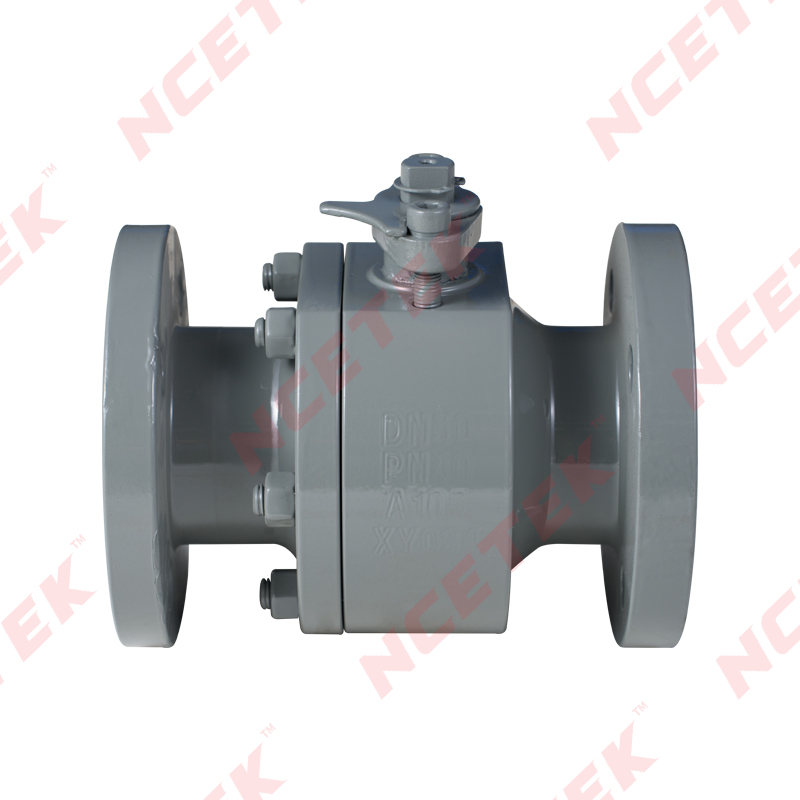
A Heat Resistant Ball Valve is built with materials and structures suited to high operating temperatures. Its performance depends on how well the body, ball, seat and sealing parts work together.
Metal parts expand when they heat up, but different materials expand at different rates. Inside a ball valve, those differences can change the clearances and the contact between ball and seat.
Possible effects include:
Designers therefore have to look at how internal parts respond to pressure and temperature together. Evaluating them separately misses the interaction.
The seat handles sealing and friction. Its material must stay compatible with the operating temperature, the fluid and the pressure. Each seat material has its own mechanical and thermal behavior.
| Material Category | Relevant Characteristics | Selection Consideration |
|---|---|---|
| PTFE-based materials | Low friction and chemical resistance | Temperature limits and creep behavior |
| Reinforced polymer materials | Better mechanical properties in suitable applications | Compatibility with media and operating temperature |
| PEEK-based materials | Stiffness and thermal resistance | Pressure, temperature and chemical compatibility |
| Metal seats | Suited to certain demanding thermal conditions | Surface finish, sealing design and operating torque |
The right choice depends on the full operating environment. A material that does well in cold water may seal differently once the water is hot.
A Heat Resistant Ball Valve pairs a suitable body structure with internal parts chosen for high-temperature service. The design has to address several points:
Where the line is heated and cooled often, thermal cycling belongs in the valve specification too. A valve that holds up under steady operation at one temperature may behave differently when it moves repeatedly between temperatures.
Choosing by pipe diameter or nominal pressure alone can hide important operating conditions. Engineers should look at the whole application: pressure fluctuations, temperature changes, fluid characteristics and how often the valve operates.
A valve's allowable working pressure varies with temperature. As temperature climbs, material strength and sealing behavior can change. So the pressure rating at ambient temperature can't simply be carried over to hot service.
Before selecting a Heat Resistant Ball Valve, consider:
Check the manufacturer's pressure-temperature rating for the exact valve configuration.
Material compatibility affects service life and maintenance needs. A stainless steel body, for example, may suit some industrial water applications, yet the seat and stem sealing materials still need their own evaluation.
A practical selection process runs like this:
The two types support the ball differently. In a floating design, line pressure pushes the ball toward the downstream seat to seal. In a trunnion-mounted design, the ball is held mechanically and the seats move toward it.
These differences affect pressure loading, seat design and operating torque.
| Design Consideration | Floating Ball Valve | Trunnion-Mounted Ball Valve |
|---|---|---|
| Ball support | Ball moves under line pressure | Ball has mechanical support |
| Sealing mechanism | Pressure-assisted downstream seat contact | Spring or pressure-assisted seat contact, depending on design |
| Pressure loading | Shaped by ball movement and seat contact | Carried through the supporting structure |
| Typical selection consideration | Valve size and differential pressure | Pressure class and application requirements |
The right configuration depends on the intended service, valve size, pressure conditions and the manufacturer's design.
Even a well-specified Heat Resistant Ball Valve needs sound operating practice and regular inspection. Manage pressure at the pipeline level. Don't treat the valve as an isolated part.
These measures help limit mechanical stress and keep operation consistent.
Step 1: Monitor Pressure Conditions
Install suitable pressure monitoring at the relevant points in the line. Watch for unexpected changes during pump startup, shutdown and valve operation.
Step 2: Control Valve Opening and Closing Speed
Avoid unnecessarily fast valve operation where the system is prone to hydraulic transients. Set the right speed through system design and operating requirements.
Step 3: Inspect Internal Sealing Components
During scheduled maintenance, examine:
Step 4: Review Operating Conditions After Maintenance
Pump settings, pipeline layout or fluid temperature may change, and with them the pressure the valve sees. Review the valve specification whenever the system changes significantly.
Pressure monitoring plays a growing role in industrial water management. It lets operators catch abnormal hydraulic behavior before equipment performance slips.
A pressure trend tells you about changing flow, recurring surges and possible restrictions. Read it alongside valve inspection records, and maintenance teams get a clearer picture of equipment condition.
In industrial installations, it also helps separate a valve fault from an upstream or downstream system issue.
Choosing a Heat Resistant Ball Valve takes more than finding a material that tolerates heat. The valve must also seal well, stay mechanically stable and operate properly under the pressure conditions of the application.
We know industrial valve selection has to reflect the actual working environment, not general product descriptions. Our approach starts with your application: operating temperature, pressure conditions, fluid compatibility and connection specifications.
Before requesting a valve configuration, prepare this information:
With these details, the technical team can judge whether a given Heat Resistant Ball Valve configuration suits your pipeline.
Are pressure fluctuations affecting your valve selection or an existing pipeline? Contact our team to discuss your operating conditions and Heat Resistant Ball Valve requirements. Share your pressure and temperature specifications to get technical guidance on a valve configuration for your industrial application.
 nce@cnnsv.com
 +86-15727968392 / +86-15397375798
 +86-577-67091815
 +86-577-67091815
 Dongou Industrial Zone, Oubei Street, Yongjia County, Wenzhou City, Zhejiang Province, China


Contact Us