
 русский
 简体中文

A pipe carrying catalyst dust, coal slurry, or hot steam does not treat a valve kindly. Seats scratch, polymer inserts soften, and a valve that sealed well on commissioning day starts to weep a few months later. A Metal Seated Ball Valve is built for these conditions, using hardened metal surfaces on both the ball and the seat. Here is how it works, what it is made of, where it fits, and what to check before ordering.
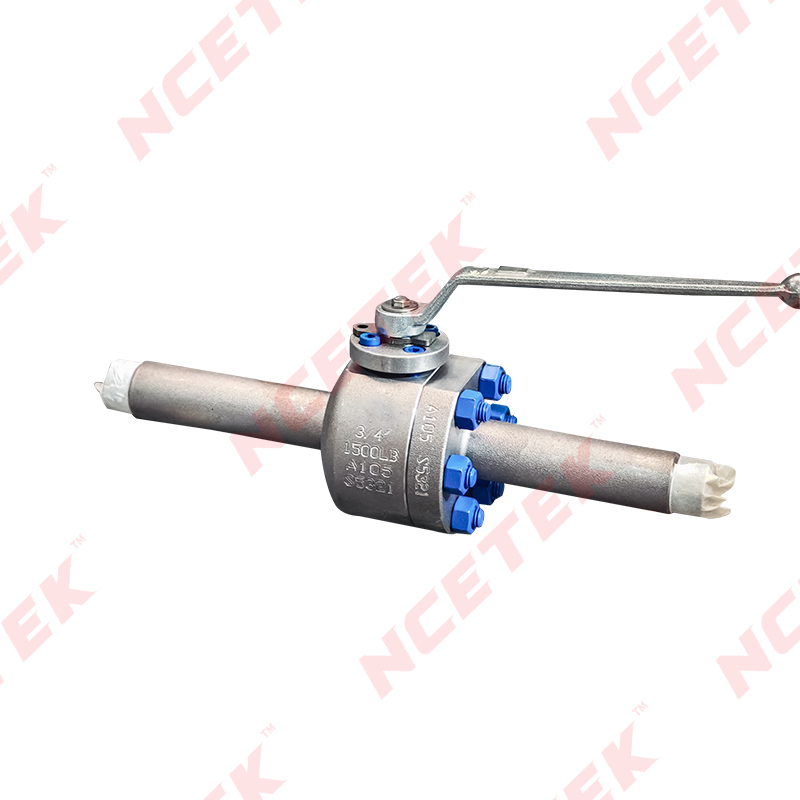
A Metal Seated Ball Valve controls or isolates flow with metal-to-metal contact between the ball and the seat. Soft seated designs use polymers such as PTFE. This design relies on machined, hardened, and lapped metal surfaces instead.
The main parts are:
Metal contact suits services where polymer seats soften, cut, or wear away. Hot process lines, solids-laden fluids, and valves that cycle often are common examples. Maintenance teams in these plants usually value a seat that survives a full operating season over one that seals tighter on a clean test bench.
Metal sealing has a cost, though. Without a flexible polymer to fill small surface flaws, the ball and seat must be machined and lapped carefully. Sealing quality depends on contact geometry, surface finish, and manufacturing accuracy.
The ball turns a quarter turn between open and closed. When open, the bore lines up with the pipe and fluid passes straight through. When closed, the solid side of the ball faces the flow and presses against the seat.
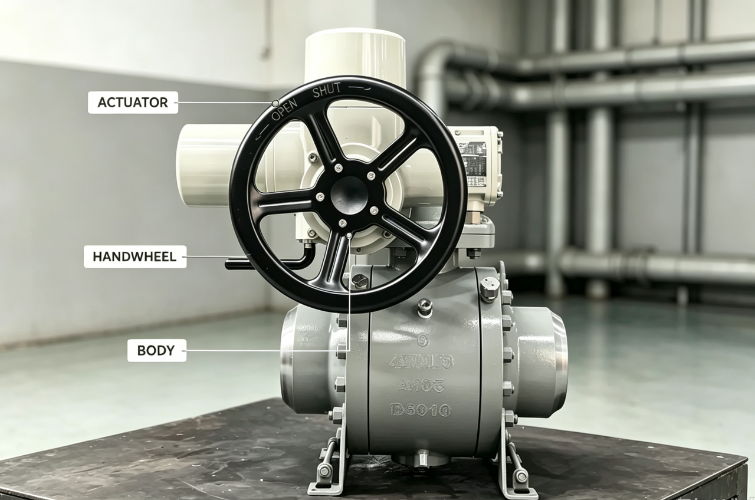
A quarter-turn motion makes operation quick, and it suits hand levers, gearboxes, pneumatic actuators, and electric actuators. A plant operator can close a line in seconds. That matters in a catalyst unit or a slurry loop, where delay lets solids settle and pack.
Contact force comes from the seat spring and, in some designs, from line pressure pushing the ball toward the seat. The mating faces are hard-faced and lapped together so the contact band is narrow and even. A soft seat can deform to hide imperfections. A metal seat cannot, so surface quality carries the whole job.
In a floating design, the ball is not fixed by trunnions. Line pressure pushes it against the downstream seat to help the seal. This arrangement is common in smaller sizes.
In a trunnion mounted design, the ball is held by upper and lower supports. The seats move toward the ball instead. This reduces operating torque and keeps ball movement under control, so it is common in larger sizes and higher pressure classes. Choice depends on size, pressure class, torque limits, sealing needs, and the process.
A metal seat is only as durable as its surface. Hard-facing puts a tougher layer on the sealing faces, and the right choice depends on what flows through the valve.
Hardness is only one factor. A very hard coating can be brittle, and a tough alloy may wear faster against fine abrasive. Corrosion resistance, temperature, and medium composition should be weighed together.
Other features may be available, including spring-loaded seats, anti-static construction, fire-safe design, blowout-proof stems, double block and bleed arrangements, and actuator mounting. Confirm each against the product datasheet and test documents. A feature listed in a brochure is not proof it was built into the valve you are buying.
Both types use a rotating ball, yet they behave differently in service. This comparison shows where each tends to fit.
| Point | Metal Seated | Soft Seated |
|---|---|---|
| Seat material | Hard-faced metal | PTFE, reinforced PTFE, other polymers |
| Temperature | Suited to higher-temperature designs | Limited by the polymer |
| Abrasion | Better wear resistance with suitable hard-facing | Polymer can be cut by particles |
| Sealing | Depends on machining and lapping | Often gives very tight shut-off |
| Typical use | Severe service | General industrial service |
Neither design wins every case. A clean water or light chemical line gains little from a metal seat, and a soft seat there is usually a sensible choice. A slurry line is different. Particles that would score a polymer seat within a short time are far less damaging to a hard-faced surface.
Leakage deserves honest discussion. A properly chosen soft seat may seal more tightly than a metal seat in clean service. If tight shut-off is the priority and the medium is clean, a soft seat can be the better match. If particles, heat, or frequent cycling cause the failures, metal seating addresses the actual problem.
Final choice should rest on operating conditions, leakage requirement, maintenance plans, and total cost of ownership across the life of the valve.
Catalyst particles move through fluid catalytic cracking units, and delayed coking involves hot, heavy streams. Seats in these lines erode quickly when the sealing surface is soft or unprotected. A Metal Seated Ball Valve with suitable hard-facing is common for catalyst handling, high-temperature isolation, and certain reactor and heater services.
Coal slurry, black water, ash, and slag carry solids that grind against any moving seal. Particle size, concentration, and pressure drop across the valve all influence wear. Solids can also build up around the seat, so the ball and seat arrangement should be reviewed for packing risk.
Ore slurries and tailings wear pipes, pumps, and valves alike. Wear-resistant ball and seat surfaces can extend service intervals when matched to the slurry. A mismatch, such as coating chosen for fine silt but used with sharp coarse rock, can shorten life instead.
Power stations use valves on high-temperature steam isolation, fly ash and bottom ash handling, and boiler drain and vent lines. Pressure and temperature ratings, body materials, and sealing design must be checked line by line. Ash handling in particular is hard on seats, and a poor match shows up as repeated shutdowns for repair.
Nominal size and pressure class are only the starting point. These points shape a sound specification.
Sharing operating data with an experienced valve manufacturer early in the project often avoids rework later. Even a short list of media, temperature, pressure, and cycle frequency changes the quality of the advice.
Experienced buyers still run into these problems on severe-service projects.
A short engineering review before purchase usually costs far less than an unplanned shutdown to replace a valve that was wrong for the duty.
A valve is only as dependable as the shop that machines, coats, lapps, and tests it. Look for a supplier that can explain material selection, coating processes, lapping practice, inspection steps, and test records in plain terms. Traceability of materials, steady delivery, and technical support after shipment matter to EPC contractors, plant operators, and distributors alike.
NCValve supplies Metal Seated Ball Valve solutions for demanding industrial service. Send your process conditions to the NCValve team to discuss suitable configurations, coatings, and actuation for your project.
 nce@cnnsv.com
 +86-15727968392 / +86-15397375798
 +86-577-67091815
 +86-577-67091815
 Dongou Industrial Zone, Oubei Street, Yongjia County, Wenzhou City, Zhejiang Province, China


Contact Us