
 русский
 简体中文
简体中文

The API Floating Ball Valve takes its name from the way the ball sits inside the valve body. The ball does not have any mechanical support at the top or bottom. It floats between the upstream and downstream seats, held in position only by the contact of those seats and the pressure of the fluid in the line.
When the valve is closed, line pressure pushes the ball against the downstream seat. That pressure creates the seal. The higher the pressure, the tighter the ball presses against the seat. The design takes advantage of the system pressure to enhance sealing rather than fighting against it.
Floating ball valves appear in a certain size range. The ball gets heavier as diameter increases, and the floating design becomes less practical at larger sizes because the ball itself becomes too heavy to move freely. A Flanged Floating Ball Valve connects to piping through flange connections, which allow for straightforward installation and removal during maintenance.
The API designation indicates that the valve meets certain standards for design and testing. A valve carrying the API mark has undergone the testing required by industry standards. Users can expect a certain level of performance from a valve that meets those requirements.
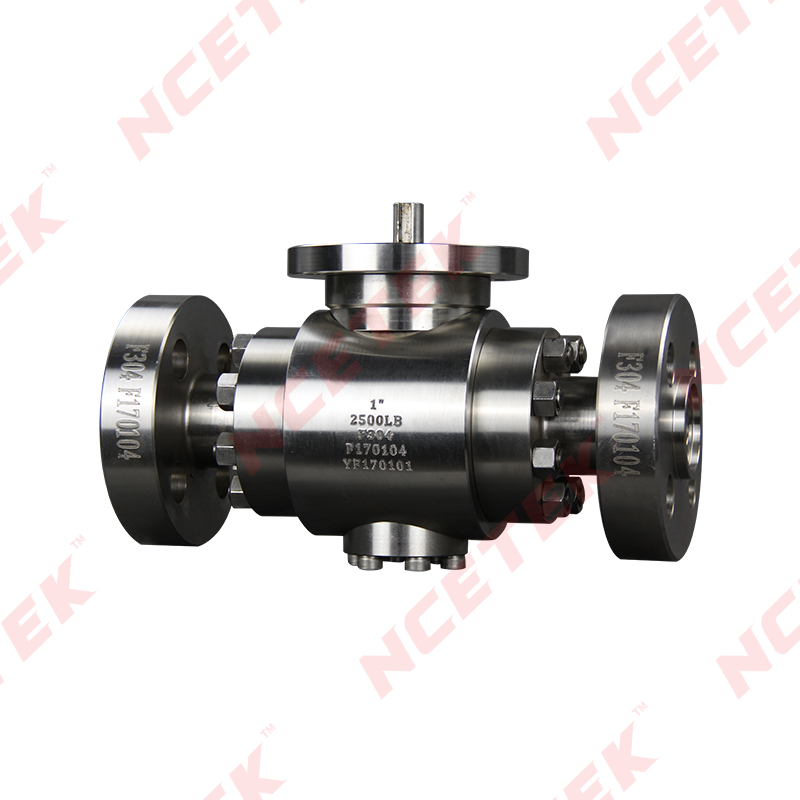
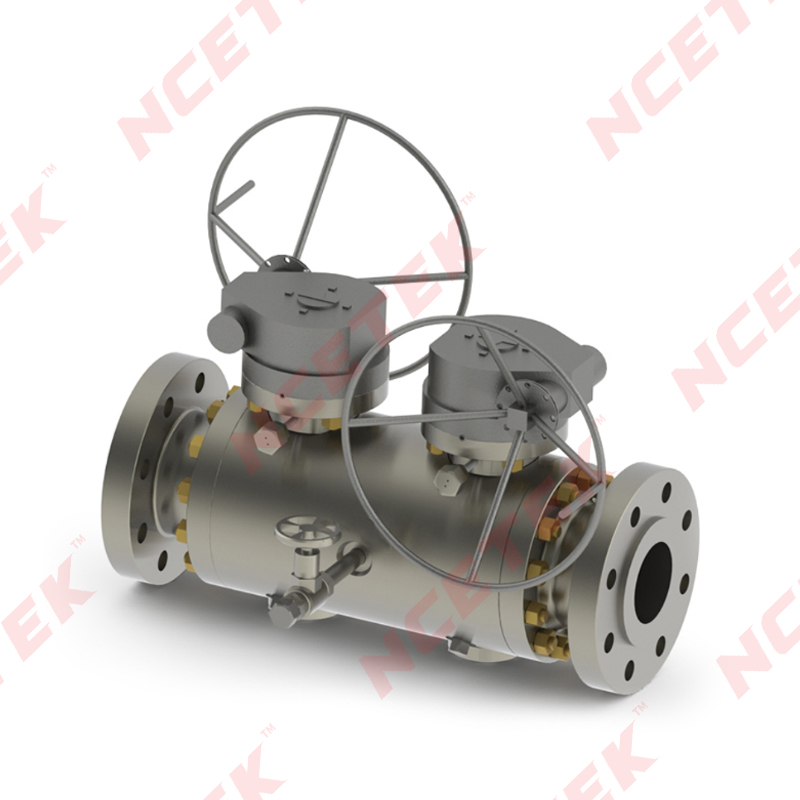
Trunnion mounted ball valves take a different approach to supporting the ball. Instead of floating between seats, the ball gets anchored at the top and bottom by shafts called trunnions. These shafts keep the ball in a fixed position within the valve body.
The seats in a trunnion valve do not stay still. They are spring-loaded and move toward the ball to create the seal. Line pressure also helps push the seats against the ball. The combination of spring force and pressure energy creates the seal without requiring the ball to move.
Trunnion designs handle larger diameters than floating valves. The fixed ball removes the weight issue that limits floating designs. A trunnion valve at the same diameter offers lower operating torque because the ball does not need to be lifted or forced against a seat during operation.
The trunnion mounted design has more mechanical parts than the floating design. The shaft supports, bearings, and spring-loaded seats add complexity. That complexity allows trunnion valves to operate in higher pressures and larger sizes.
The ball support method provides the primary structural difference. A floating ball sits free in the valve cavity. A trunnion ball has fixed shafts at the top and bottom.
| Feature | API Floating Ball Valve | Trunnion Mounted Ball Valve |
|---|---|---|
| Ball support | Free-floating between seats | Fixed with top and bottom shafts |
| Seat behavior | Stationary seats with moving ball | Spring-loaded seats moving toward ball |
| Sealing force | Pressure pushes ball against seat | Springs and pressure push seats against ball |
| Size range | Smaller diameters | Larger diameters possible |
| Mechanical complexity | Simpler | More complex |
The floating design has fewer moving parts, which can simplify maintenance. The trunnion design has more components that could wear over time. The Flanged Floating Ball Valve connects the simpler design to standard flanged piping, keeping the installation straightforward.
The differences in support and sealing affect how each valve responds to system conditions. A floating valve depends on pressure for sealing, while a trunnion valve provides more consistent sealing across varying pressure conditions.
Sealing happens differently in floating and trunnion designs. In a floating valve, the upstream pressure pushes the ball toward the downstream seat. The ball compresses against the seat, and that compression creates the seal. Higher pressure creates a tighter seal.
The sealing effect can be directional. Pressure from the upstream side pushes the ball against the downstream seat, sealing the valve. Pressure from the other direction does not have the same effect. The floating design provides better sealing in one direction than the other.
In a trunnion valve, the seats do the moving. Springs push the seats toward the ball, and line pressure also helps push the seats into contact. The ball does not need to move for sealing to occur. The sealing effect remains consistent regardless of which side of the valve sees pressure.
The trunnion design offers self-relieving capability. If pressure builds up in the valve cavity between the seats, the design allows that pressure to release. The floating design does not have that feature. The differences in sealing mechanics have practical implications for how each valve type performs in different applications.
The size and pressure capabilities of the two designs differ because of the ball support method. Floating valves work well at smaller sizes and lower pressures. Trunnion valves handle larger sizes and higher pressures.
The floating design relies on pressure to push the ball against the seat. At higher pressures, the ball presses harder against the seat, which creates more contact force. The seat materials limit how much force they can tolerate. Above a certain pressure, the seats may deform or wear quickly.
Trunnion designs distribute the load differently. The fixed ball does not press against the seats with the same force. The seats move toward the ball, and springs control the contact pressure. That arrangement allows trunnion valves to handle higher pressures without overloading the seat materials.
The relationship between size and pressure influences valve selection. A Flanged Floating Ball Valve might serve a low-pressure, small-diameter line. The same application at larger diameter or higher pressure would likely require a trunnion valve. The boundary between the two ranges depends on the operating conditions and the specific design of each valve.
Operating torque refers to the force needed to turn the valve from open to closed. The two valve designs differ in how much torque they require and how that torque changes with operating conditions.
In a floating ball valve, the ball presses against the downstream seat when the valve is closed. That pressure creates friction between the ball and the seat. Turning the valve requires overcoming that friction. The higher the line pressure, the more force the ball exerts against the seat, and the more torque needed to operate the valve.
The torque requirement in a floating design also increases with valve size. A larger ball has more surface area in contact with the seat, which creates more friction. The combination of pressure and size makes floating valves harder to operate at high pressures and large diameters.
Trunnion valves maintain more consistent torque across pressure ranges. The fixed ball does not press against the seats with the same force regardless of pressure. The seats move toward the ball, and springs control the contact pressure. The operating torque stays relatively stable whether the valve is under pressure or not.
The torque difference affects actuator selection. A valve that requires high torque needs a larger actuator. The actuator adds cost and takes up space. A Flanged Floating Ball Valve at a certain pressure and size may need a larger actuator than a trunnion valve at the same pressure and size.
The different characteristics of floating and trunnion valves make each type more suitable for certain applications. Choosing the right valve for the service conditions affects reliability and operating life.
Floating ball valves appear in many processing plant applications. Chemical plants, refineries, and manufacturing facilities use them in smaller pipe sizes. The simple design and lower cost make floating valves attractive for services where pressures and temperatures stay moderate.
Trunnion valves dominate pipeline applications. Long-distance pipelines, gas transmission lines, and high-pressure services use trunnion designs almost exclusively. The ability to handle large diameters and high pressures makes trunnion valves the standard for pipeline isolation.
Double block and bleed capability represents another application difference. Trunnion valves with two seats and a cavity between them can provide double block and bleed isolation. The valve seals on both the upstream and downstream sides, and the cavity between the seats can be vented. Floating valves do not offer that capability.
The sealing reliability difference matters in certain services. Trunnion valves provide consistent sealing across a wider range of pressures. Floating valves seal well at high pressure but may leak at low pressure when the ball does not press against the seat with enough force.
Maintenance needs differ between the two valve types. The floating design has fewer parts, which can simplify certain maintenance tasks. The trunnion design has more components that may require attention over the service life.
Seat replacement in a floating valve involves removing the valve from the line and disassembling the body. The seats get accessed from the ends. The ball comes out, the seats get replaced, and the valve goes back together. The job requires taking the valve out of service.
Trunnion valves sometimes offer in-line maintenance options. Some designs allow seat replacement without removing the valve from the pipeline. The seats can be accessed through the valve ends while the body stays in place. That feature reduces downtime compared to removing the valve.
The increased complexity of trunnion valves means more parts that could wear. The shaft bearings, spring-loaded seats, and sealing elements all have service lives. Each component needs inspection and possible replacement over time. The maintenance program for a trunnion valve needs to address these additional components.
Emergency repair features appear in many pipeline applications. Some trunnion valves include sealant injection fittings. If the seat seal begins to leak, sealant can be injected to restore sealing temporarily. That feature allows the valve to remain in service until a scheduled maintenance shutdown. Floating valves generally do not include that capability.
Design standards provide a common language for valve performance expectations. Standards cover many industrial ball valve designs, and the applicable standard depends on the valve type and application.
Ball valves used in many processing applications follow certain standard requirements for design, materials, testing, and marking. A valve meeting those requirements undergoes specific testing to verify sealing performance and pressure containment. Many floating ball valves are built to these standards.
Valves used in pipeline applications meet different standards. Pipeline standards include additional requirements beyond those for processing applications. Pipeline valves need to meet more demanding specifications for leakage rates, fire safety, and operational reliability. Trunnion mounted ball valves used in pipeline service are typically built to pipeline standards.
The difference between the standards reflects the difference in application severity. Pipeline services operate at higher pressures, larger diameters, and more demanding conditions. The valves need to perform reliably without frequent maintenance. The standards for pipeline valves require more stringent testing and higher levels of quality control.
The selection between standards often follows the selection between floating and trunnion designs. A floating valve meeting processing standards serves many industrial applications. A trunnion valve meeting pipeline standards serves pipeline applications.
Selecting the right valve type involves evaluating several factors. The operating conditions, installation requirements, and lifecycle costs all influence the decision.
System pressure serves as a primary selection criterion. Floating valves work well at moderate pressures. Trunnion valves handle high pressures. A general boundary exists somewhere in the pressure range, though the exact boundary depends on the specific design and materials.
Pipe diameter also plays a role. Floating valves appear in smaller sizes. Trunnion valves handle larger diameters. A Flanged Floating Ball Valve might be the right choice for a moderate-sized line, while a trunnion valve would be selected for a larger line.
Actuator requirements influence the selection as well. A valve requiring high torque needs a larger actuator. The torque characteristics of floating and trunnion valves differ, and that difference affects the actuator selection and cost.
Lifecycle cost goes beyond the initial purchase price. Maintenance costs, expected service life, and downtime all figure into the total cost. A trunnion valve might cost more to purchase but offer lower maintenance costs over the service life. The total cost depends on the specific application and the valve design.
| Consideration | Floating Design | Trunnion Design |
|---|---|---|
| Pressure capability | Moderate | High |
| Size capability | Smaller diameters | Larger diameters |
| Maintenance complexity | Simpler | More complex |
| Double block and bleed | Not available | Available |
| Standard type | Processing applications | Pipeline applications |
The selection between the two designs often depends on whether the application falls on one side of the boundary or the other. Moderate-pressure, smaller-diameter, standard services may favor the floating design. Higher-pressure, larger-diameter, critical services may require the trunnion design.
 nce@cnnsv.com
 +86-15727968392 / +86-15397375798
 +86-577-67091815
 +86-577-67091815
 Dongou Industrial Zone, Oubei Street, Yongjia County, Wenzhou City, Zhejiang Province, China


Contact Us