
 русский
 简体中文
简体中文

Double block and bleed describes a valve setup where two separate sealing barriers exist between the process fluid and the outside environment, with a way to relieve pressure from the space between those barriers. In simple terms, a DBB valve provides two layers of protection instead of one. If the first seal leaks, the second seal still holds. The cavity between them can be vented or drained, giving operators a way to check whether both seals are working properly.
This arrangement finds use in places where leakage poses serious problems. Pipelines carrying gas or hazardous chemicals need reliable isolation so maintenance crews can work safely. Fluid systems handling valuable products require positive shutoff to prevent loss. Processing plants with strict environmental controls demand valves that do not rely on a single sealing surface. For these situations, DBB capability offers a practical way to meet safety and operational requirements.
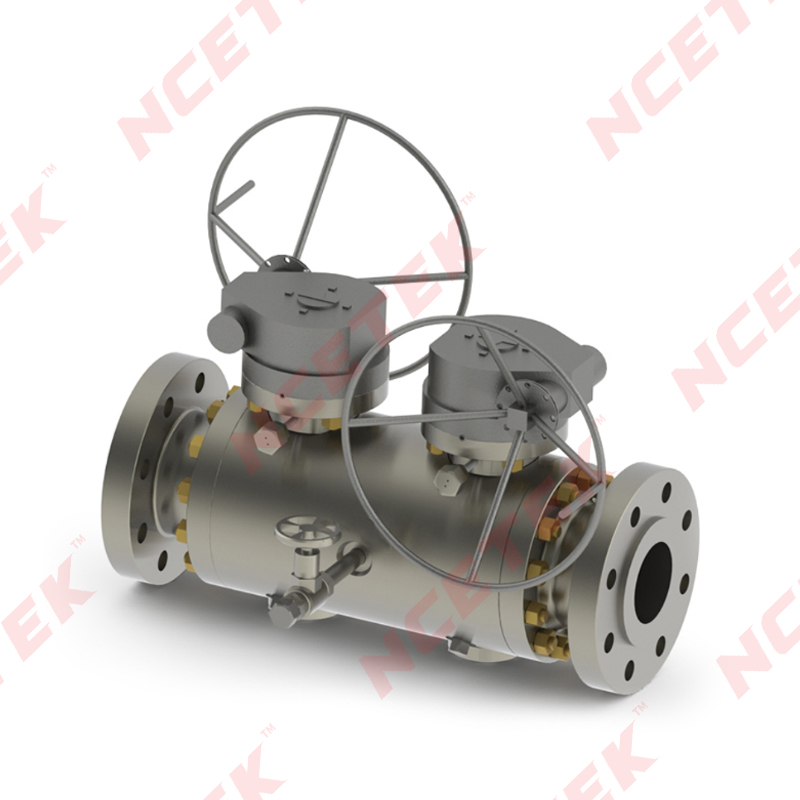
The Top Entry Trunnion Ball Valve shows up often in DBB service specifications. Its design includes several features that suit this demanding application. The ball mounts on fixed trunnion bearings, which keeps it stable regardless of line pressure. The top entry body allows access to internal parts without cutting the valve out of the pipeline. These characteristics, along with the sealing arrangement, make the design a logical choice when double block and bleed is required.
| Valve Feature | Practical Benefit for DBB Service |
|---|---|
| Trunnion-mounted ball | Ball stays centered, seats seal consistently |
| Independent seat assemblies | Each side seals separately for double block |
| Bleed port connection | Pressure between seals can be checked and released |
| Top entry bonnet | Seats and seals can be inspected without pipe removal |
| Fixed ball position | Operating torque stays predictable over time |
To understand why this valve works well for DBB, it helps to look at how it is put together. The ball does not float freely like in some other valve designs. Instead, it sits on bearings at the top and bottom of the ball—the trunnions. These bearings take the thrust from line pressure, so the ball does not get pushed downstream when pressure is applied. That fixed position matters for DBB because it keeps the ball centered between the two seats.
In a floating ball valve, pressure pushes the ball against the downstream seat. That works for many applications but creates a problem for DBB. Only one seat—the downstream one—gets squeezed tight by the pressure. The upstream seat may not seal as firmly. In the trunnion design, both seats can seal equally well because the ball stays in place and the seats move toward the ball instead.
The top entry construction means the bonnet sits on top of the valve body. Removing the bonnet exposes the ball and seats from above. For DBB valves, which often get installed in critical locations, this access saves time when maintenance comes due. Workers can inspect seat condition, check seal integrity, or replace worn components without disturbing the pipe connections. The valve stays in line, and the rest of the system continues operating normally.
Another practical point involves operating torque. Because the trunnions carry the pressure load, the valve does not become harder to turn as pressure rises. Some valves require more effort to operate at high pressure, but with trunnion mounting, the torque remains relatively steady. Operators appreciate this consistency, especially when valves get cycled frequently.
Achieving double block requires sealing on both sides of the ball at the same time. The Top Entry Trunnion Ball Valve accomplishes this through separate seat assemblies located upstream and downstream of the ball.
Each seat works independently. When the valve closes, the upstream seat presses against the ball to seal the incoming flow. The downstream seat presses against the opposite side of the ball to seal the outgoing flow. Both seats seal at the same time, creating two barriers between the process fluid and the downstream side.
Pressure in the line helps the seals work better. As line pressure increases, the force pushing each seat against the ball increases. This pressure-assisted sealing means the valve seals tighter at higher pressures rather than losing effectiveness. For DBB service, where dependable sealing matters, this characteristic adds a layer of reliability.
Consider what happens when the valve closes. The ball turns to block the flow path. The upstream seat contacts the ball face and stops incoming flow. The downstream seat contacts the opposite ball face and stops any backflow or downstream pressure. Between these two seats, the cavity contains whatever media was trapped when the valve closed. That cavity is where the bleed function comes into play.
A few points help explain the sealing arrangement:
With both seats sealing, the cavity between them contains trapped media. That media sits at line pressure when the valve first closes. For maintenance or safety reasons, that trapped pressure often needs to be released before any work can proceed. The bleed port provides a way to do that.
A small connection in the valve body opens into the cavity area. Opening this connection allows trapped pressure to vent out. Depending on the service, the vented media might go to atmosphere, a flare system, or a collection vessel. The bleed operation itself accomplishes two things. It relieves pressure so the valve can be worked on safely. It also provides a test of the seals.
Here is how the test works in practice. Close the valve, isolating both upstream and downstream. Open the bleed port and release any cavity pressure. Then close the bleed port and observe the cavity pressure gauge. If no pressure builds back up, both seals are holding. If pressure returns, some media is getting past one of the seats. That gives operators a clear indication that maintenance is needed.
Cavity pressure management also relates to seat performance. In some services, pressure trapped in the cavity can push the seats away from the ball, affecting their sealing capability. The valve design accounts for this, and the bleed port provides the means to manage that pressure as needed.
Safety applications benefit from this bleed capability. For a valve handling flammable gas, for instance, being able to test the integrity of both seals before opening the valve adds an important margin of safety. The operator knows, with reasonable confidence, that both barriers are intact based on the cavity pressure behavior.
Valves picked for double block and bleed usually wind up in places where a failure creates real problems. Pipeline isolation points, tank connections, and process tie-ins all need valves that hold up over many operating cycles. The Top Entry Trunnion Ball Valve comes with several features that help meet that need.
Trunnion mounting cuts down on wear where the valve seals. Since the ball stays fixed in place, the seats do not get the rubbing and sliding action found in floating ball designs when pressure pushes the ball around. Less movement means less friction, and less friction means the seat materials last longer. For DBB work, where both seats have to seal properly, keeping the seats in good shape carries more weight than in single-seal applications.
People who run these valves through frequent open-close cycles find the sealing holds up well. The ball stays put, so the seats wear evenly across their sealing faces. Even wear gives predictable sealing over time. The DBB function stays intact through many operations.
Higher line pressure actually works in favor of sealing. When pressure goes up, the force pushing each seat against the ball goes up too. The valve does not get harder to seal; it seals more firmly. For DBB service, where both seals have to hold against pressure spikes, this behavior adds a measure of confidence.
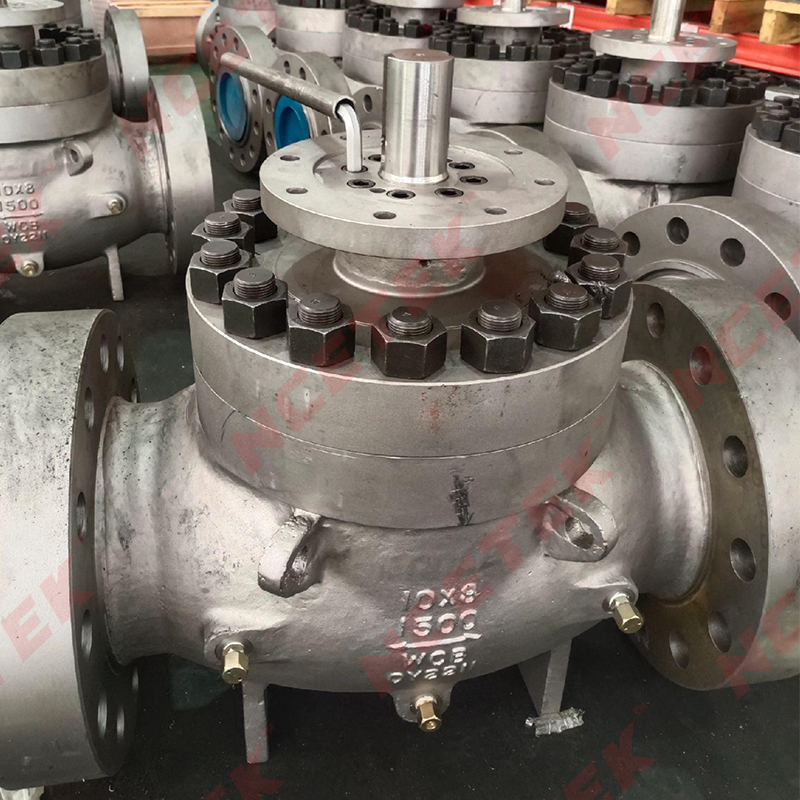
Access for maintenance sets the top entry design apart from many other valve types. In pipelines where isolation valves handle critical duties, pulling a valve out of the line for repairs usually means shutting down a whole section of the plant. The top entry arrangement avoids that headache.
Workers get to internal parts by taking the bonnet off the top of the valve body. The ball, seats, seals, and bearings all sit visible and reachable from above. Ordinary tools reach the fasteners and parts without needing special rigging or extra clearance. For big valves, cranes or hoists may help with lifting the bonnet and ball, but the access path stays simple.
In-line maintenance keeps the valve body between the flanges. The pipe connections stay put, and the rest of the system keeps running while work goes on. For DBB applications, where valves often sit in safety-critical spots, this maintenance ability cuts downtime and makes planning easier. Scheduled inspections happen more often because the disruption to production stays small.
The top entry setup also makes replacing seats and seals easier. These parts wear out over time and eventually need changing. With the bonnet off, each seat assembly comes out, gets inspected, and gets replaced as needed. The trunnion bearings can get serviced at the same time, so the valve goes back into service with renewed performance.
| Maintenance Task | What Top Entry Offers |
|---|---|
| Checking seats | See them without pulling valve from line |
| Swapping seats | Parts come out the top, pipe stays in place |
| Changing seals | Reachable through the bonnet opening |
| Inspecting bearings | Trunnions exposed after ball comes out |
| Full overhaul | Done in-line, less system downtime |
Sealing reliability comes from more than just mechanical design. The materials used for seats, seals, and body construction affect how well the valve keeps its DBB capability over time. Material choices need to match the service conditions the valve will see.
Seat materials run from soft elastomers to hard metals. Soft seats like PTFE or nylon seal well at lower temperatures and moderate pressures. They conform to the ball surface and make a tight seal with fairly low operating torque. For clean services at room temperature, soft seats often do the job.
Metal seats handle higher temperatures and more abrasive fluids. They resist erosion from gritty media and keep sealing integrity at temperatures that would ruin soft materials. The trade-off involves higher torque and the need for precise machining to get metal-to-metal sealing. For tough DBB applications, metal seats or combination seats often give better long-term results.
Seal materials for the stem and bonnet connection matter too. Elastomeric seals, graphite packing, and PTFE-based materials each handle different temperatures and pressures. The right mix of seat and seal materials should match the expected service range so the whole valve performs reliably.
A Top Entry Ball Valve Supplier should offer guidance on material options for specific services. The selection process means matching material properties to operating conditions. The right material choice supports the sealing capability that DBB applications need.
Picking a valve for double block and bleed service means looking at several factors beyond basic size and pressure rating. The operating environment, how often it gets used, and the maintenance schedule all affect the choice.
Operating pressure and temperature set the basic limits. Valves rated for the maximum expected pressure and temperature give a safety margin. Consider the full range of operating conditions, including startup, shutdown, and upset situations, when looking at pressure and temperature ratings.
Sealing requirements depend on what is flowing through the valve. Hazardous materials demand tighter sealing. Clean fluids may allow more flexibility in seat material choice. The leak rate acceptable for the application should get defined before picking seat and seal materials.
Maintenance access and frequency affect long-term operating costs. Valves that need removal from the line for service create more downtime than those serviced in place. For applications with frequent inspection requirements, the top entry design offers clear advantages.
| What to Look At | Questions Worth Asking |
|---|---|
| Pressure rating | Does the valve cover the full operating range |
| Temperature range | Will the chosen materials handle all conditions |
| Media type | Are seat and seal materials compatible with the fluid |
| Cycling frequency | Will the valve handle expected operation count |
| Maintenance interval | How often will inspection and service be needed |
| Access constraints | Can the top entry be reached for maintenance |
Valve size and connection type should match the existing piping. Flanged connections, butt weld ends, and other configurations affect installation and removal. The weight of larger valves may need structural supports or lifting gear.
Seal design and cavity pressure management deserve attention too. Knowing how the valve handles trapped cavity pressure and how the bleed port works helps evaluate the overall design. A well-designed DBB valve keeps cavity pressure management simple and direct.
The Top Entry Trunnion Ball Valve brings together several features that work well for double block and bleed applications. The fixed ball position supports consistent sealing on both sides. The top entry construction simplifies maintenance without pulling the valve from the line. The bleed function gives a practical way to test seal integrity and manage cavity pressure.
Different applications place different demands on the valve. Material selection, size, and pressure rating should match the specific service conditions. Knowing these factors helps in picking a valve that will deliver reliable DBB performance over its service life.
 nce@cnnsv.com
 +86-15727968392 / +86-15397375798
 +86-577-67091815
 +86-577-67091815
 Dongou Industrial Zone, Oubei Street, Yongjia County, Wenzhou City, Zhejiang Province, China


Contact Us