
 русский
 简体中文

Industrial piping changes shape as operating conditions change. A pipe grows when it heats up and shrinks as it cools. The movement looks small, yet it can load joints, supports, connected equipment, and valves.
A High Temperature Ball Valve has to work inside a piping arrangement that accounts for this movement. When pipe growth is not managed, the valve may face unwanted loads, misalignment, or extra stress at its connections. A Heat Resistant Ball Valve should therefore be judged as part of the whole piping system and not as a standalone part. Understanding thermal expansion helps engineers plan layouts and review supports, and it helps buyers describe their conditions clearly to suppliers.
The amount of movement depends on pipe material, length, temperature change, and system layout. The aim is not to stop expansion but to give it a planned path while keeping connected equipment within its intended conditions. A pipe that moves freely in a chosen direction places little strain on its neighbors. A pipe restrained without thought passes extra force to supports, joints, and valves.
| Piping Condition | Possible Effect on the Valve |
|---|---|
| Pipe expansion | Shifts the position of connected components |
| Pipe contraction | Changes alignment of the piping arrangement |
| Restricted movement | Raises loads on connections and supports |
| Uneven movement | Adds stress to the valve body or joints |
| Repeated heating and cooling | Creates recurring changes in alignment and loading |
These effects matter most when a valve sits between pipe sections that move differently.
When a pipe expands, its connection points shift. If the valve and the adjoining sections cannot move compatibly, the joint carries additional force. No connection style can offset a layout that overloads the valve, so alignment and support remain important whatever the method.
These can occur together. A valve between two sections growing in different directions sees a more complex load than one in a straight, evenly supported run.
Supports carry pipe weight and guide movement. Some hold the pipe in position, while others allow motion in one direction. A scheme that suits a cool system may need review once the pipe operates under changing temperature. If the pipe is held at the wrong point, force travels to a valve that was never meant to carry it.
| Support Consideration | Why It Matters |
|---|---|
| Support location | Influences how movement is distributed |
| Movement direction | Shows whether the pipe can expand as intended |
| Valve proximity | Affects loads around the connections |
| Pipe weight | Influences the load on the valve assembly |
| Maintenance access | Keeps inspection and servicing practical |
The valve's job is to control flow. The piping arrangement should carry and manage the loads. A valve placed near a fixed support, guide, bend, or equipment connection deserves a closer look, because support positions and valve position must work together.
A valve near a bend, equipment nozzle, or change of direction can feel movement from several parts of the system. Even a straight section needs room to expand and contract. With several bends or branches, movement follows an indirect path, so the complete route should be studied.
A small layout adjustment found at this stage can reduce stress at a connection or ease later service.
Some systems hold a steady condition for long periods, while others start up, shut down, and clean regularly. Each swing in temperature changes loads and alignment around the valve. Recurring movement can stress connections over time, and the actual effect depends on design, materials, conditions, and installation quality.
A Heat Resistant Ball Valve should be assessed in two ways. Its materials and construction must suit the operating environment, and its installation must avoid unnecessary external load. Fixing only one leaves the other cause of trouble in place. If alignment shifts, leakage appears, operating effort changes, or a connection deteriorates, find the cause before blaming the valve alone. Follow the manufacturer's inspection recommendations.
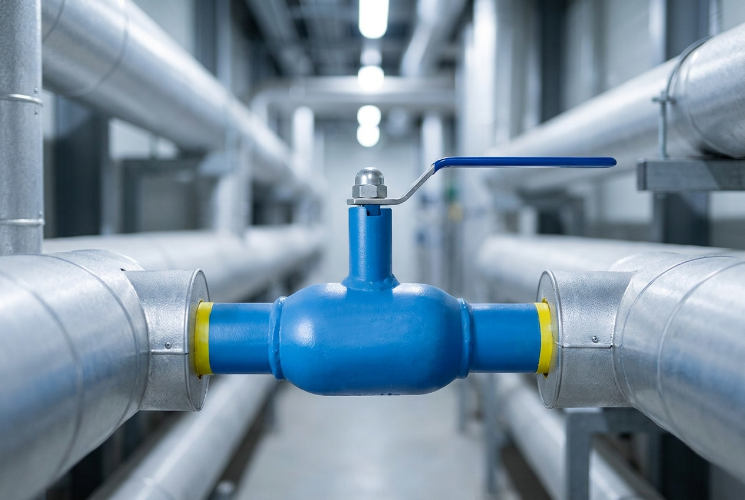
Pipe, valve body, connection parts, and seals respond differently to temperature, which matters when joined parts grow by different amounts. A heat-resistant label does not mean a valve suits every hot application. The High Temperature Ball Valve must match the process, and the rated limits and instructions must be checked before purchase.
| Selection Area | Question to Review |
|---|---|
| Process medium | Are valve materials compatible with the fluid or gas? |
| Operating temperature | Is the valve rated for the intended service? |
| Operating pressure | Does it suit the expected pressure? |
| Pipe material | How does the pipe respond to temperature change? |
| Connection arrangement | Can the assembly accommodate expected movement? |
| Installation environment | Are external loads and access considered? |
A suitable valve cannot fix a poor layout. Routing, support placement, guides, and movement allowances all help, and any change should be assessed against the whole design.
Moving a support may relieve one load and shift movement elsewhere, so review the full arrangement before finalizing decisions.
Describe the installation, not just the product category. Useful details include process medium, pressure, temperature range, pipe material, connection type, and the heating and cooling pattern. Information on nearby supports, bends, equipment connections, and space helps too.
Separate the valve's rated capability from the loads the piping creates. The supplier can explain intended service and installation requirements, while the piping design must handle expansion, support placement, and external forces. Before confirming a High Temperature Ball Valve or Heat Resistant Ball Valve, check that the product matches the application and that the installation plan accounts for pipe movement.
 nce@cnnsv.com
 +86-15727968392 / +86-15397375798
 +86-577-67091815
 +86-577-67091815
 Dongou Industrial Zone, Oubei Street, Yongjia County, Wenzhou City, Zhejiang Province, China


Contact Us