
 русский
 简体中文
简体中文

Industrial systems often need flow controlled quickly and predictably — starting a line, shutting it down for maintenance, isolating one section before another task begins. In moments like these, a valve's internal design and operating method decide how smoothly the whole system actually responds.
A floating ball valve controls flow through a rotating ball with a passage bored through its center. Line the passage up with the pipeline and fluid moves through freely; turn the ball to the closed position and the solid part of its body blocks the path entirely. That straightforward operating principle makes floating ball valves a natural fit for on-off applications where clear open and closed states genuinely matter.
Fast operation still depends on genuinely more than the ball alone, though. The actuator or handle, valve size, pressure conditions, sealing arrangement, and the surrounding pipeline all play into how the valve actually performs once installed. Engineers, maintenance teams, and purchasing departments benefit from understanding these factors together rather than judging a valve on speed alone.
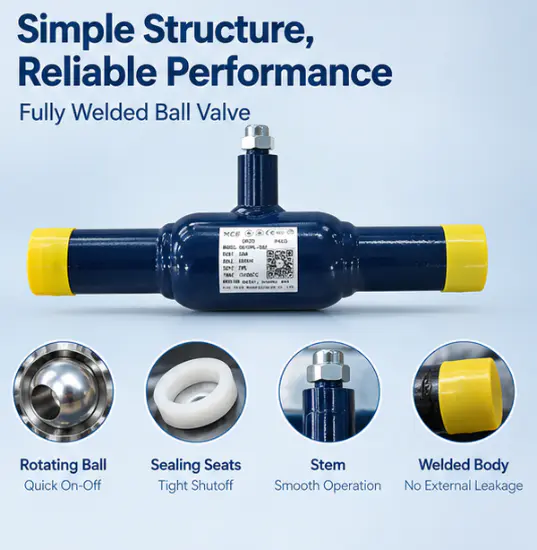
A floating ball valve controls flow through a ball rotating between two sealing seats. That ball isn't rigidly fixed at both ends — fluid pressure can actually push it toward the downstream seat, which helps the sealing surfaces stay in firm contact once the valve closes.
The operating movement itself stays simple. Turning the ball shifts its internal passage relative to the pipeline, and the valve never needs a long linear stroke to open or close, which supports direct operation in plenty of applications.
This arrangement suits equipment that needs moving cleanly between two defined states — isolating a process line, controlling supply to a machine, or separating part of a fluid system during service work all fit naturally here.
| Valve Feature | Role in On-Off Operation |
|---|---|
| Rotating ball | Changes the flow path |
| Internal passage | Allows fluid to pass when aligned |
| Sealing seats | Contact the ball to restrict flow when closed |
| Stem | Transfers operating movement to the ball |
| Handle or actuator | Provides the force needed to operate the valve |
The actual response still comes down to the complete valve assembly working together. A manually operated valve responds quickly when an operator can reach it without trouble, while an automated installation needs an actuator genuinely matched to the operating conditions it faces.
The main movement inside a floating ball valve stays rotational. The ball turns between open and closed, letting the flow path change without any long internal component needing to travel through the pipeline itself.
That compact movement makes the valve genuinely practical for on-off control. Once the mechanism rotates the ball into position, the flow path changes right along with it, and the design gives maintenance staff a clear operating position to check during inspection.
How fast that movement actually happens depends on how the valve gets operated. A handle needs manual effort, so response time hinges on access and the operator's own action. An actuator delivers controlled movement through an automated command instead, which proves useful when the valve sits as one step in a larger process sequence.
Speed shouldn't become the only design goal pursued here, though. Closing a valve too fast can trigger pressure changes in certain pipeline systems, so operating speed needs matching to the fluid, the pipeline layout, and the process requirements rather than getting chosen in isolation from the rest of the installation.
A valve needs restricting flow completely once it reaches the closed position. In a floating ball valve, sealing seats sit around the ball and press against its surface, forming the actual sealing interface.
Once the valve closes, pressure conditions can push the ball firmly against the downstream seat. That contact helps create the seal, though real performance still depends on seat material, surface condition, the fluid itself, and the operating conditions surrounding it all.
Seat selection matters a great deal here, since these components take contact every time the valve opens or closes. Particles in the fluid, unsuitable cleaning methods, or repeated operation under conditions that don't suit the valve can all wear seats down gradually, slowly changing how well the valve seals over time.
| Sealing Consideration | Why It Matters |
|---|---|
| Seat material | Needs to suit the fluid and operating environment |
| Ball surface condition | Influences contact with the sealing seats |
| Fluid cleanliness | Particles may damage or obstruct the sealing interface |
| Operating frequency | Repeated movement can contribute to wear |
| Maintenance condition | Helps identify changes in sealing performance |
A valve that moves fast but doesn't seal reliably still fails the process requirement. Buyers do well weighing operating response and shutoff ability together, not treating either one as sufficient on its own.
An actuator moves a valve in response to a control signal or command, cutting the need for someone physically operating each valve by hand and supporting consistent operation across a larger industrial system.
On a floating ball valve, the actuator transfers movement into the valve stem, which turns the ball in response. That actuator needs enough force overcoming the resistance created by the valve's seals, the internal pressure, and whatever other operating factors come into play.
Different actuator types suit different jobs. Some systems run on electric actuation, others on pneumatic or hydraulic power, and the right choice depends on the available energy source, control requirements, operating environment, and how maintenance gets handled on site.
The actuator still needs matching the valve's actual demands. An unsuitable unit might move too slowly, struggle completing its stroke, or place unnecessary strain on the valve assembly over time, while a well-matched one supports predictable movement while keeping the valve within its intended operating limits. For automated processes, control signals and position feedback help confirm the valve actually reached the requested state — especially valuable when the valve sits somewhere difficult reaching directly.
The internal design is only one piece of the response puzzle. Several connected factors shape how quickly a valve actually moves between open and closed.
Valve size affects how much force turning the ball requires, with larger assemblies often demanding more operating effort depending on their design and service conditions. Pressure differences across the valve also shift the force acting on the ball and sealing surfaces.
The actuator, where one's fitted, brings its own set of considerations — output, control settings, power supply, and how it connects to the valve all shape the final movement. In manual installations, handle design and how easily an operator can reach it decide most of the response time.
Other factors worth weighing together include the condition of the ball and sealing seats, the type of fluid passing through, whether particles or deposits are present, the operating temperature and pressure, how the valve sits in the pipeline, and the maintenance history behind the whole assembly. Swapping out the actuator alone rarely fixes slow operation if the real cause turns out to be a worn component, a poor installation, or resistance building up somewhere inside the valve itself.
Ball valves use different internal arrangements suited to different service conditions. A floating design lets the ball shift slightly under pressure, while other designs support the ball through additional mechanical structure instead.
That difference changes how the valve handles pressure, sealing loads, and operating effort. A floating ball valve suits plenty of general on-off applications well, while a different design might fit better when the operating conditions or valve size place different demands on the assembly.
Selection should rest on the intended duty rather than assuming every ball valve behaves identically regardless of design.
| Design Consideration | Question to Ask |
|---|---|
| Ball support | How is the ball held and positioned? |
| Operating force | What force is needed under expected conditions? |
| Sealing arrangement | How does the design create a seal? |
| Pressure conditions | Does the valve suit the system's operating range? |
| Maintenance access | Can the assembly be inspected and serviced as required? |
Picking a floating design just because its movement looks simple on paper misses the point — the valve still needs matching the actual process conditions and the level of isolation the job demands.
A fully welded ball valve has a body formed through welded construction rather than one that opens through a conventional bolted joint. That construction suits pipeline applications where body arrangement, external sealing points, and long-term installation needs genuinely shape equipment selection.
Its ability to deliver on-off control still comes down to the internal mechanism and operating system, though. A welded body alone doesn't make the valve faster than any other ball valve — operating response still rests on the ball, seats, stem, actuator or handle, and the conditions the valve actually works under.
These valves make sense in pipeline systems where the body design suits the installation and service environment specifically. Selecting one calls for attention to internal components, the valve's intended pressure and temperature range, and whatever maintenance approach is actually available on site. Since the body doesn't open the way a conventional bolted-body valve does, buyers also need understanding the manufacturer's service recommendations — access to internal components and the expected maintenance process shape long-term suitability just as much as the body style itself.
Temperature changes how valve materials behave. Heat can alter sealing component properties, shift clearances, and place different demands on both the body and the operating mechanism as a whole.
A high temperature ball valve gets built for service conditions where temperature genuinely needs careful attention. Its suitability rests on the materials used in the body, ball, seats, stem seals, and other components, together with the pressure and fluid conditions it'll actually face.
The term itself doesn't point to one universal construction — different designs use different sealing materials or structural arrangements addressing different operating needs, so buyers do better reviewing the actual stated operating limits rather than trusting the product name alone.
High-temperature service also shapes operating response in its own right. Changes in material behavior and thermal expansion affect contact between moving parts and sealing surfaces, and a valve built for ordinary conditions won't necessarily hold up once exposed to temperatures outside its design range. Picking the right valve calls for a clear read on actual service conditions — temperature, pressure, fluid compatibility, operating frequency, and maintenance access all considered together rather than one at a time.
The phrase "ball floating valve" usually describes a valve built around a floating ball arrangement, where the ball shifts slightly under pressure rather than staying held rigidly in place by separate support at both ends.
As pressure acts on the ball, it moves toward the downstream sealing seat, and that movement helps ball and seat establish the contact needed restricting flow. The arrangement stays relatively straightforward, though its suitability still depends on the operating conditions and the valve's specific design.
A fixed-ball design uses additional support holding the ball in position instead, changing how forces get managed inside the valve and making it suitable for different combinations of size, pressure, and service demand.
Neither design deserves judging on operating speed alone. Required operating force, sealing behavior, pressure conditions, and the intended application all shape which one actually fits. For buyers comparing products, confirming the actual construction matters more than the label — product names vary between suppliers, so drawings, technical descriptions, and operating instructions should settle how the ball is genuinely supported.
A well-chosen valve can still perform poorly if the installation itself creates unnecessary resistance or makes the operating mechanism hard reaching. Pipeline alignment, support, actuator positioning, and the condition of connected components all shape how the assembly actually behaves once running.
The valve needs installing according to the manufacturer's instructions and the process requirements together. Pipe loads shouldn't place unintended stress on the valve body, and the operating mechanism needs room enough moving through its full intended range.
Automated installations demand extra attention toward actuator alignment, electrical or air connections, and control signals. If the actuator receives a faulty command or can't complete its movement, the valve simply won't reach the position it's supposed to.
Installation planning also needs considering access for inspection and maintenance down the line. A valve tucked behind equipment or crammed into a tight space becomes genuinely hard operating manually or checking during routine service, no matter how well it was built in the first place.
Repeated operation gradually wears on both internal and external components. Sealing seats wear down, deposits build up, and the stem or actuator connection can grow less responsive over time — changes that make the valve harder operating or weaken its ability isolating flow reliably.
Routine maintenance catches these changes before they interfere with normal operation. The inspection method should follow the product instructions and whatever safety procedures apply on site, and work on a valve shouldn't begin until the relevant section has been properly isolated and made safe first.
Maintenance teams do well checking the external body and connections for visible damage or leakage, watching whether the handle or actuator completes its full intended movement, listening for unusual resistance, noise, or vibration, reviewing any reported changes in shutoff performance, and following the approved procedure for inspection, repair, or replacement throughout. Internal repairs belong with qualified personnel using suitable parts and procedures — unapproved adjustments can throw off sealing, operating force, and the overall safety of the installation.
Keeping maintenance records also helps teams spot repeated issues early. A valve that regularly turns difficult operating might point to the process conditions, the installation itself, or component selection rather than ordinary wear alone.
Buyers need matching the valve to the actual task ahead of it. A product picked for general isolation won't necessarily suit a system demanding automated control, high-temperature service, or specific fluid compatibility.
Evaluation should cover construction, operating method, sealing arrangement, materials, and installation requirements together. Buyers also need confirming the intended pressure and temperature limits and whether the product genuinely suits the fluid running through the pipeline.
A practical checklist worth running through covers the intended open and closed functions, whether operation will be manual or automated, compatibility with the process fluid, suitable pressure and temperature conditions, the sealing performance required, the installation and maintenance space actually available, and whether clear documentation and service instructions come with the product.
A fully welded ball valve fits a pipeline installation where its body construction suits the service requirements at hand. A high temperature ball valve becomes more appropriate once the operating environment places added demands on material selection. A ball floating valve suits yet another application where ball support and sealing arrangement line up with the intended conditions. The selection process genuinely works best when it covers the full operating environment — once the valve, operating mechanism, pipeline, and maintenance plan all get considered together, fast on-off control becomes a matter of suitable system design rather than speed chased on its own.
 nce@cnnsv.com
 +86-15727968392 / +86-15397375798
 +86-577-67091815
 +86-577-67091815
 Dongou Industrial Zone, Oubei Street, Yongjia County, Wenzhou City, Zhejiang Province, China


Contact Us